MOTTO:
অন্ধকাৰৰ পৰা আলোকলৈ
VISION:
To preserve, promote, and enrich the Assamese language, literature, and
cultural heritage while inspiring future generations to value and carry
forward its timeless legacy.
MISSION:
To provide quality education in Assamese language and literature, promote
research and creative expression, and actively preserve and spread Assamese
culture through academic and community engagement.
ESTABLISHMENT:
|
Degree
|
Course
|
Established Year
|
|
UG
|
BA. ASSAMESE
|
2017
|
ABOUT THE DEPARTMENT:
The Department of Assamese was introduced and established in the year 2017.
At present, the Department offers Assamese Minor, AEC at the degree level,
and also MIL
at the Higher Secondary level.
ASSAMESE DEPARTMENT FACULTY MEMBER

PRIYANKA BRAHMA
|
|
FACULTY RECHARGING STRATEGIES
|
|
NAME
|
QUALIFICATION
|
ACHIEVEMENT
|
|
PRIYANKA BRAHMA
|
M.A. ( Assamese)
|
|
PROGRAMME SPECIFIC OUTCOME
-
Students develop high-level proficiency in the Assamese language,
including its grammar, phonology, and the historical evolution of the
language and its script. They also learn about its dialectal variations.
-
Graduate students who are capable of performing research, analysis,
and criticism of literary and cultural texts from different historical
periods and genres.
-
Assist students in the development of intellectual flexibility,
creativity, and cultural literacy so that they may engage in life-long
learning.
-
Students should be able to identify, analyze, interpret and
describe the critical ideas, values, and themes that appear in literary and
cultural texts and understand the way these ideas, values, and themes inform
and impact culture and society, both now and in the past.
FYUGP COURSE
Semester – I
|
Sl.no
|
Course code
|
Course Title
|
Course Outcome
|
|
1
|
ASMMIN101-4
|
History and Trends of Assamese Literature
|
a) Students will get an opportunity to understand the
development of Assamese literature.
b) The learners will internalise the major trends in
Assamese Literature by reading selected works of major
Assamese writers.
|
|
2
|
ASMAEC101-2
|
Study of Assamese Language
|
a)To introduce the students with the folk
medicines and their significance in modern period.
b) To inspire the students to value the
|
Semester – II
|
Sl. no.
|
Course code
|
Course Title
|
Course Outcome
|
|
1
|
ASMMIN102-4
|
Cultural behaviour of assam
|
a) To make the students understood the inherent
significance of the apparently prevalent cultural traits.
b) Learners will also come to know the major
ethnic groups of Assam along with their contribution in
making Assamese Culture.
c) It is expected that after learning the course
a sense of longingness would be nurtured in the mind of
the students that in turn imbibes spirit of cultural
preservation and conversation.
|
|
2
|
ASMAEC102-2
|
Style of Assamese Language
|
a)To impart different aspects of style in the
usages of Assamese language.
b) To introduce the styles in Assamese language
ranging from literature to non-literary texts.
|
Semester – III
|
Sl. no.
|
Course code
|
Course Title
|
Course Outcome
|
|
1
|
ASMMIN201-4
|
Functional Grammar of Assamese
|
a) The basics of Assamese grammar will be
imparted.
b) The course aims at making the students capable
of applying Assamese language in a corrected manner.
|
|
2
|
ASMAEC201-2
|
Cultural Tourism of Assam
|
a)To understand the significance and scope of
culture and folklore as a mean of tourism.
b) To imbibe the spirit of cultural
sustainability through highlighting the significance of
culture from the perspective of economy and livelihood
|
Semester – IV
|
Sl. no.
|
Course code
|
Course Title
|
Course Outcome
|
|
1
|
ASMMIN202-4
|
Assamese prose and Biography
|
a)To make the learners known to the origin and
development of Assamese prose in terms of selected major
prose works.
b) Students will also get an opportunity to
understand the trends and development of Assamese
biographical
writings.
c) Reading some of the major biographical
writings will also have a moral impact on the mind of the
learners.
|
|
2
|
ASMAEC202-2
|
Creative writing
|
a)To internalize the process of making of
literature.
b) To introduce the students with the
craftsmanship of literature.
|
Semester – V
|
Sl. no.
|
Course code
|
Course Title
|
Course Outcome
|
|
1
|
ASMMIN301-4
|
Introduction to Assamese Fictional Literature
|
-
a)To understand the historical context of
Assamese Literature from the period of Arunodoi to
Contemporary Assamese Literature
-
b) To understand the contextual factors that
make distinct influence in the production and circulation
of literature
-
c) To impart knowledge about the major trends
and writers of Assamese Literature.
|
Semester – VI
|
Sl. no.
|
Course code
|
Course Title
|
Course Outcome
|
|
1
|
ASMMIN302-4
|
Introduction to Assamese Poetry and Drama
|
a) To introduce the students with the various trends and
stages of development of Assamese poetry and Drama.
b) To impart knowledge to the students about the nature
of Assamese folk poetry and Drama with reference to some
selected specimen.
c) To introduce the early Assamese poetry and Drama
through the study of some of the works of Major Assamese
poets.
|
BEST PRACTICES:
- Conducting regular subject-based seminars.
- Organizes visits to industries, historical places, government departments.
- Each student gets a mentor/faculty advisor.
- Regular meetings to discuss academics, personal growth, career goals.
- Cultural and Sports Activities.

MOTTO:
Literature is the Mirror and the Lamp of Humanity.
VISION:
Creating Educators for a Changing World.
MISSION:
Elevation and Globalization of Bodo Language, Literature and Culture.
ESTABLISHMENT:
|
Degree
|
Course
|
Established Year
|
|
UG
FYUGP
|
BABODO
BA BODO
|
2016
2023
|
ABOUT THE DEPARTMENT:
The Department of Bodo at St. Ann’s College, Balagaon, Kokrajhar, was
established in 2016 under Gauhati University and integrated into Bodoland
University in 2017. Since its inception, the department is supported by
three dedicated Assistant Professors and has maintained an excellent
academic record.
The curriculum offers a strong foundation in Bodo society, customs, laws,
language, literature, religion, and traditional practices. It also includes
comparative studies of Assamese culture and language, Bengali literature,
and the Bodo group of languages in Northeast India.
In August 2023, the department adopted the Four-Year Undergraduate (FYUG)
Programme under Bodoland University following UGC guidelines. The revised
eight-semester program is designed to provide students with a comprehensive,
future-oriented academic pathway.
|
BODO DEPARTMENT FACULTY MEMBERS
|
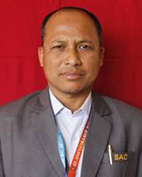
BIMAL CH. BRAHMA
|

RIMA NARZRAY
|
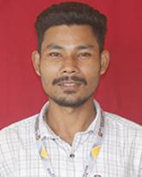
DANSWRANG BASUMATARY
|
|
FACULTY RECHARGING STRATEGIES
|
|
NAME
|
QUALIFICATION
|
ACHIEVEMENT
|
|
BIMAL CH. BRAHMA
|
M.A., NET
|
Seminar - 4
Seminar Attended - 8
Workshop – 3
Conference – 1
|
|
RIMA NARZARY
|
M.A., NET, SLET
|
Seminar – 10
Workshop - 4
Conference – 1
Publication - 5
|
|
DANSWRANG BASUMATARY
|
M.A., NET
|
Nil
|
PROGRAMME SPECIFIC OUTCOME
-
Master both the artistry and utility of the Bodo and English languages
through the study of literature, folklore, and other contemporary forms of
culture.
-
Utilize the critical and analytical faculties necessary for academic
success, professional environments, and engagement with an increasingly
complex, interdependent world.
-
Perform research, analysis, and criticism of Bodo literary and cultural
texts from different historical periods and genres, alongside other
comparative literature.
-
Develop intellectual flexibility, creativity, and cultural literacy through
a deep engagement with their heritage, fostering a capacity for life-long
learning.
-
Identify, analyse, interpret, and describe the critical ideas, values, and
themes in Bodo literary and cultural texts, and understand their influence
on Bodo society and their interconnectedness with broader cultural dynamics,
both past and present.
-
Write analytically and effectively in a variety of formats, including
essays, research papers, and critical reviews, demonstrating proficiency in
both Bodo and English.
FYUGP COURSE
Semester – I
|
Sl. no.
|
Course Code
|
Course Title
|
Course Outcome
|
|
1.
|
BODMAJ101-4
|
History of Bodo Literature
|
After completing this course students will be
able to-
Understand the background of literary
history of the Bodo literature. Realize life and society
of the community.
Demonstrate critical and analytical approach
in literature review.
|
|
2.
|
BODMIN101-4
|
Introduction to Language and Linguistics
|
After completing this course students will be
able to-
Gather general idea about language and
linguistics
Acquire considerable knowledge of linguistic
level of human speech of how languages are well-ordered in
case of phonological, morphological, syntactic and
semantic process.
Understanding of how the structures vary
language to language, of how language changes through the
ages
Understand functions of language, human
knowledge that generates through linguistic discourse.
|
|
3.
|
BODAEC101-2
|
Functional Bodo
|
At the end of the course the students shall –
Able to develop linguistic competence.
Able to identify the language functions in
the spoken discourse.
Able to demonstrate ability of expression by
improving grammatical skill.
Able to discuss topic in a group
|
|
4.
|
BODSEC101-3
|
Introduction to Translation Studies and Practice
|
After successful completion of the course
student will be able to-
Understand the concept of translation and
types of translation and its applicability in literature.
Know the importance of translation.
Understand the sociological significance of
language, literature and culture.
|
Semester – II
|
Sl. no.
|
Course Code
|
Course Title
|
Course Outcome
|
|
1.
|
BODMAJ102-4
|
Study of Early Bodo Poetry
|
At the end of the course the students shall
understand –
About the trend of old Bodo poetry.
About mystic and romantic poems composed
during the period
About the poems composed to bring social
awareness among the mass
|
|
2.
|
BODMIN102-4
|
Traditional Knowledge System of the Bodo
|
Know the concept of traditional knowledge
and its applicability in life and social space.
Know the need and importance of safeguard of
traditional knowledge system.
Know the sociological significance in life
and society.
Know the importance of intellectual property
in different sectors.
|
|
3.
|
BODAEC102-2
|
Speaking and Writing Ability in Bodo
|
After completing this course students will be
able to-
Know to acquire pragmatic knowledge of
language use
Know human knowledge associated with human
intelligible language Know ability of expression of
thought in different contexts
|
|
4.
|
BODSEC102-3
|
Computer Application in Bodo
|
After completing this course students will be
able to-
Know to acquire pragmatic knowledge of
computer language
Know application of computer how to use and
control to create file and folder
Know to demonstrate ability of software,
Internet and Website to handle the present-day contexts
Know to opening file, folder and saving and
composition, editing and printing
|
Semester – III
|
Sl. no.
|
Course Code
|
Course Title
|
Course Outcome
|
|
1.
|
BODMAJ201-4
|
Folk-Festivals of North East India
|
Able to understand community history and
traditions
Able to realize social philosophy and helps
to preserve our culture and heritage
Understand more about Ethical and moral
values
Know more about social responsibility as a
member of society
Give unique opportunity to exchange cultural
views which promotes social harmony
|
|
2.
|
BODMAJ202-4
|
Phonology of Bodo Language
|
At the end of the course the students shall –
Able to understand basics of phonology of
the language.
Able to realize linguistic application in
discourse context
-
Able to develop linguistic skill
Able to acquire competence for effective
communication in diverse context of speaking
|
|
3.
|
BODMIN201-4
|
Study of Modern Bodo Poetry
|
Able to define the elements of poetry and
aesthetic attribute.
Understand the poetry as a means of
transference of human emotions, feeling and human
psychology.
Able to demonstrate skill for using
emotional language in the form of poetic expression.
Able to develop self-expression and
structural creativity based on life and social space.
|
|
4.
|
BODAEC201-2
|
Communicative Bodo
|
At the end of the course the students shall –
Able to understand basic knowledge of
vocabulary and construction of sentence of the language.
Able to use different symbols in language
writing.
Able to develop linguistic and communication
skill with correct pronunciation and writing.
Able to acquire competence for effective
communication with clarity of voice and its pause.
|
|
5.
|
BODSEC201-3
|
Manuscript Preparation
|
At the end of the course the students shall –
Able to understand basics of manuscript
preparation in the language. Able to know about the use of
punctuations and symbols
Able to know about benefits of editing and
taking into MS word & PageMaker
Able to develop skill how sign and symbol
are used in proofreading.
|
Semester – IV
|
Sl. no.
|
Course Code
|
Course Title
|
Course Outcome
|
|
1.
|
BODMAJ203-4
|
Literary Criticism (Eastern)
|
Come to know about theory and concept of
eastern literary criticism
Come to know about the uses of Rasa, Chanda
and Alankara with special reference to Bodo literature
Come to know about theory and concept of
eastern literary criticism
Understand about the uses of Rasa, Chanda
and Alankara with special reference to Bodo literature
Know the Chanda used in poetry of Bodo
literature in early as well as modern literature.
|
|
2.
|
BODMAJ204-4
|
Study on Folk-literature of the Bodo
|
Facilitate students to realize distinctive
features of folk literature and cultural identity of the
community.
Facilitate students to understand
traditional knowledge acquired and transmitted generation to
generation.
Understand about relation of man with
ecology that will make student environment conscious and
this is very important in present times.
Facilitate to create greater insight to life
and way of living and social functions of the folklore in
the social sphere.
Understand ethical and moral values of life.
|
|
3.
|
BODMAJ205-4
|
Study of Modern Bodo Drama
|
At the end of the course the students shall
understand –
About the background of modern Bodo drama
and different types of drama in Bodo literature.
About the social pictures displayed in
modern drama of the era.
About modern period of Bodo drama.
About the aestheticism of modern Bodo drama
and its historical trends.
About the dramatic art and literary value.
About the reality of life and literary
importance of few selected dramas in Bodo.
|
|
4.
|
BODMIN202-4
|
Sociological Outlook of Bodo Novel
|
Able to understand reading and re-reading of
literary texts with regards to Bodo novel in the cultural
and historical context. Able to realized relation of
life and literature.
Able to understand fundamental significance
of narrative in human life and culture.
Able to realize sociological issues raised
by the author through storytelling.
|
|
5.
|
BODAEC202-2
|
Mass Media and the Bodo Language
|
At the end of the course the students shall –
Able to develop the concept of mass media.
Able to make competence in news and report
writing.
Able to develop the skill of news editing
for electronic media.
|
Semester – V
|
Sl. no.
|
Course Code
|
Course Title
|
Course Outcome
|
|
1.
|
BODMAJ301-4
|
Selection of Non-Fictional Prose
|
Able to understand theoretical knowledge of
the Bodo non-fictional writing.
Able to understand the nature of essay
writings with some examples.
To provide a theoretical concept of
biography and autobiography with reference to selected
specimens in Bodo literature.
|
|
2.
|
BODMAJ302-4
|
Morphology of Bodo Language
|
Understand the basics ideas of morphology of
the language
Understand linguistic application in course
content and discourse context
Develop the linguistic skill of the language
Make competence for effective communication
in diverse context of language speaking
|
|
3.
|
BODMAJ303-4
|
Introduction to Literary Theory and Criticism
|
Able to understand the western literary
theory and criticism
Able to reading of literary texts with
regards realized relation of life and literature.
Able to understand fundamental significance
of human life and culture.
Able to realize sociological issues raised
by the author through storytelling.
Able to develop critical and analytical
thinking.
|
|
4.
|
BODMAJ304-4
|
Women Representation in Bodo Literature
|
Able to know about women writings in Bodo,
contribution of women writers in different genres of
literature and identify and evaluate the women in literary
texts
Able to realized relation of life and
literature in the society
Able to understand gender disparity,
identity, power, social status and justice in human life and
culture
Able to realize issues raised in the
sociological and cultural perspective
|
|
5.
|
BODMIN301-4
|
Study of Tibeto-Burman Languages
|
Able to gain knowledge about features and
structure of Tibeto-Burman languages
Able to establish comparative and
contrastive analysis of both languages
Able to analyse the phonological and
morphological structure of the two languages
Able to realize for strengthening ability of
basic and original data of the languages
|
Semester – VI
|
Sl. no.
|
Course Code
|
Course Title
|
Course Outcome
|
|
1.
|
BODMAJ305-4
|
Comparative Study of Bodo and Assamese Folk-literature
|
To make understand depth of human life, way
of living and ethical and moral values of human life
To make the students to realize distinctive
features of comparative study of folk literature and
folklore
Able to understand cultural identity of the
Bodo and Assamese community.
Able to understand the social functions of
the Bodo and Assamese folklore and folk-life in the society
To facilitate students to realize
traditional knowledge acquired and transmitted from
generation to generation in Bodo and Assamese society
Able to understand the relation of man with
ecology which will make student environment conscious which
is very important in present time
|
|
2.
|
BODMAJ306-4
|
Comparative Study of Bodo and Assamese Literature
|
Able to understand textual comparative study
of two literature and the literary approaches of Bodo and
Assamese literature
Able to understand the historical
development of Bodo and Assamese literature.
Able to understand the importance and
significance of comparative study of Bodo and Assamese
literature
Able to realize sociological and analytical
thinking reflected through various genres of literature in
Bodo and Assamese
|
|
3.
|
BODMAJ307-4
|
Culture of Tribes of NE India
|
Able to understand the culture and
traditions, rites and customs of the tribes of NE India
Able to know the social lives, social
status, livelihood process and diverse knowledge of ethnic
communities
Able to look into the intensive and
extensive study of the histories, cultures, traditions and
customs which make northeastern a unique identity
|
|
4.
|
BODMAJ308-4
|
Comparative Study of Bodo and Assamese Language
|
Able to understand reading and re-reading of
literary texts with regards to Bodo novel in the cultural
and historical context.
Able to realise relation of life and
literature.
Able to understand fundamental significance
of narrative in human life and culture.
Able to realise sociological issues raised
by the author through storytelling.
Able to ddevelop critical and analytical
thinking.
|
|
5.
|
BODMIN302-4
|
Effective Writing in Bodo
|
Able to make clarity on communication in
Bodo in spoken and written
Able to demonstrate in various field of
knowledge in Bodo
Able to develop self-confidence
Able to exchange effective communication in
different works in Bodo
|
BEST PRACTICES:
-
Promotion of Bodo Literature.
-
Preservation of Bodo Language.
-
Organize language enrichment programs.
-
Cultural Revitalization Activities.
-
Celebrate important Bodo festivals, traditions, and folk practices
through departmental events to promote cultural identity and heritage.
-
Exposure through Field Visits.
-
Collaborative Cultural Events.

MOTTO:
Understanding The Economy, Shaping The Future.
VISION :
To Foster Analytical Thinking And Economic Wisdom For Building An
Inclusive, Sustainable And Prosperous Society.
MISSION :
To Prepare Quality Education In Economics That Nurtures Analytical
Thinking, Critical Reasoning And A Deep Understanding Of Economic
Principles To Prepare Students For Academic, Professional And Societal
Challenges.
ESTABLISHMENT:
|
Degree
|
Course
|
Established Year
|
|
UG
|
BA. Economics
|
2016
|
ABOUT THE DEPARTMENT:
The
Department of Economics at St. Ann’s College, Balagaon, Kokrajhar was
established in the Year 2016. It offers an Undergraduate (honours)
course under the Four-Year Undergraduate Programme (FYUGP) as per the
NEP 2020, affiliated to Bodoland University. The department aims to
provide students with a strong foundation in economic theory and
practical knowledge to help them understanding and adapt to changing
economic conditions. It also seeks to create awareness about banking,
financial institutions and other modern economic sectors that influence
daily life. This programme is designed to prepare students for various
career opportunities in fields such as banking, finance, agricultural,
industrial, international economics, economic planning and related
areas.
Teaching is enriched through classroom lectures, discussions, field
visits, economic awareness programmes, and project-based learning. The
department also encourages students to explore local small-scale
industries through the internship programme. Upholding the mission and
vision of St. Ann’s College, the Department of Economics strives to
promote academic excellence by providing quality education in economics,
develop analytical and critical thinking skills among students to
understand economic issues and policies, and foster awareness of
socio-economic issues at local, national and global levels.
| ECONOMICS DEPARTMENT FACULTY MEMBERS |
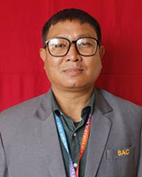
ANTHONY BASUMATARY
|

KHUNGRI BASUMATARY
|

RINKI TAMANG
|
|
FACULTY RECHARGING STRATEGIES
|
|
NAME
|
QUALIFICATION
|
ACHIEVEMENT
|
|
MR. ANTHONY BASUMATARY
|
M.A, B. ED
|
FDP- 1
Seminar-1
Workshop – 1
Conference – 0
Publication – 0
|
|
MISS. KHUNGRI BASUMATARY
|
M.A, NET
|
Seminar – 10
Conference – 0
Publication - 0
|
|
MISS. RINKI TAMANG
|
M.A, B.ED & M.ED
|
Seminar – 0
Workshop – 0
|
PROGRAMME SPECIFIC OUTCOME:
-
Understand Core Economic Theories: Grasp
foundational theories in microeconomics and macro economics (e.g.,
consumer behavior, market structures, national income, inflation and
unemployment). Apply these theoretical frameworks to explain
economic phenomena.
-
Quantitative and Analytical Skills: Develop
proficiency in mathematical and statistical methods relevant to
economics (e.g., calculus, probability, correlation, regression
etc.). Also to use econometric tools and data analysis techniques to
interpret data, test hypotheses and conduct empirical research.
-
Critical Thinking and Problem Solving: Analyze real
world economic issues (local, national, global) using theoretical,
quantitative and qualitative methods. Also critically assess
economic policies and their socio-economic impact (fiscal, monetary,
trade, environmental, etc.).
-
Awareness of Indian Economy: Understand the
structure, challenges and dynamic of the Indian economy, inclusive
growth, development, inequality, poverty and role of institutions.
-
Interdisciplinary and Flexible Learning: Integrate
knowledge from disciplines like political science, environmental
studies, sociology, education, mathematics, etc., to enrich economic
understanding.
-
Ethical, Sustainable and Global Perspective:
Understand and evaluate the economic dimensions of sustainability,
environmental externalities and climate change. Appreciate global
interdependence (trade, finance, migration) and their influence on
local economies.
-
Lifelong Learning and Adaptability: Cultivate ability to learn
independently, keep updated with evolving economic theories and
global trends. Also to adapt to changing economic environment
and policy landscapes (e.g., digital economy, global criseis).
Semester – I
|
Sl. no.
|
Paper Code
|
Course Title
|
Course Outcome
|
|
1
|
ECOMAJ101-4
|
Introductory Micro Economics
|
The course introduces the students to the
first course in economics from the perspective of
individual decision making as consumers and producers.
The students learn some basic principles of
microeconomics, interaction of demand and supply and
characteristics of perfect and imperfect markets.
|
|
2
|
ECOVAC101-4
|
Sustainable Development-I
|
By the end of this course, students will
be able to: understand sustainable development and
environmental economics. Analyze the economic
implications of environmental issues. Evaluate
economic instruments and policy tools for sustainable
development. Identify opportunities for sustainable
economic growth. Critically evaluate environmental
policy frameworks. Develop strategies for promoting
sustainable development.
|
Semester - II
|
Sl. no.
|
Paper Code
|
Course Title
|
Course Outcome
|
|
1
|
ECOMAJ102-4
|
Intermediate Micro Economics-I
|
This course trains the students of Economics about the
basic elements of consumer theory and production
theory and the functioning of the competitive markets.
This course aims to give students a solid grasp of
microeconomic analysis at the intermediate level using
mathematical techniques where appropriate.
|
Semester - III
|
Sl. no.
|
Paper Code
|
Course Title
|
Course Outcome
|
|
1
|
ECOMAJ201-4
|
Intermediate Micro Economics-Ii
|
This course helps the students to
understand efficiency of markets and the environment
where the standard market mechanism fails to generate
the desirable outcomes. The issues of market
imperfection and market failures are important
building blocks of this course.
|
|
2
|
ECOMAJ202-4
|
Introductory Macro Economics
|
By the end of the course, students will be
able to:
Understand the basic introductory macro
economics
Analyse macroeconomic data
Apply macroeconomic models
Understand the relationship between
money-banking and inflation-unemployment.
|
Semester – IV
|
Sl. no.
|
Paper Code
|
Course Title
|
Course Outcome
|
|
1
|
ECOMAJ203-4
|
Intermediate Macro Economics-I
|
By the end of this course, students will
be able to: Understand the key concepts and theories
in real world issues. Analyze and evaluate macroeconomic
models and theories. Apply macroeconomic concepts to
real world economic issues. Understand the
relationship between macroeconomic and other fields of
study such as finance and public policy.
|
|
2
|
ECOMAJ204-4
|
Statistical Methods For Economics
|
At the end of this course, the students
will understand the concept of random variables and be
familiar with some commonly used discrete and continuous
distribution of random variables. They will be able to
estimate population parameters based on random samples
and test hypothesis about these parameters. An
important learning outcome of the course will be the
capacity to analyze statistics in everyday life to
distinguish systematic differences among populations
from those that result from random sampling.
|
|
3
|
ECOMAJ205-4
|
Development Economics I
|
This course will enable the student to
understand the theoretical framework of economic
growth and development. It will also help them to learn
about the entrepreneurship, technology and economic
development, poverty and inequality. Besides that it
will enable the students to gather knowledge of the
various models of economic growth and development.
|
Semester – V
|
Sl. no.
|
Paper Code
|
Course Title
|
Course Outcome
|
|
1
|
ECOMAJ301-4
|
Intermediate Macro Economics-Ii
|
By the end of this course, students will
be able to: Understand the advanced concepts and
theories of macroeconomics; Analyze and evaluate dynamic
macroeconomic models; Apply macroeconomic concepts to
real-world economic issues; Understand the
relationship between macroeconomics and financial
markets; Evaluate macroeconomic policies in open
economies.
|
|
2
|
ECOMAJ302-4
|
Mathematical Methods For Economics-I
|
This course sharpens and upgrades the
mathematical skills acquired in school and paves the
way for the second semester course. Mathematical Methods
in Economics I. Collectively, the two papers provide
the mathematical foundation necessary for further
study of a variety of disciplines including economics,
statistics, Computer Science, finance and data
analytics. The analytical tools introduced in this
course have applications wherever optimization
techniques are used in business decision making. These
tools are necessary for anyone seeking employment as
an analyst in the corporate world. The course
additionally makes the student more logical in making or
refuting arguments.
|
|
3
|
ECOMAJ303-4
|
Development Economics Ii
|
This course will enable the student to
understand the theoretical framework of economic
growth and development. It will also help them to learn
about the demography, health and education,
environment and trade, in economic development.
Besides that, it will enable the students to gather
knowledge of the globalize perspective of economic
development.
|
|
4
|
ECOMAJ304-4
|
Population Studies
|
The outcomes of population studies
contribute to0 scientific knowledge, inform policy
making and support evidence based decision making. By
understanding population dynamics, researchers and
policy makers can develop targeted interventions,
allocate resources efficiently and address societal
challenges related to population growth, aging,
urbanization and social inequalities.
|
Semester – VI
|
Sl. no.
|
Paper Code
|
Course Title
|
Course Outcome
|
|
1
|
ECOMAJ305-4
|
Indian Economy-I
|
It will equip students with a strong
understanding of the economic dynamics of India,
enabling them to contribute effectively to policy
making, research, business decisions and
socio-economic development in the country.
|
|
2
|
ECOMAJ306-4
|
Public Finance
|
Overall, studying public finance equips
students with a deep understanding of the principles,
policies and practices related to government finance. It
enables them to analyze fiscal issues, contribute to
policy debates and make informed decisions regarding
public finance management at various levels of
government.
|
|
3
|
ECOMAJ307-4
|
International Economics
|
It will equip individuals with analytical
tools and a broad understanding of the global economy.
It provides insights into the complexities of
International economic relations and prepares students
careers in areas such as international business,
economic consulting, government agencies and
international organizations.
|
|
4
|
ECOMAJ308-4
|
Mathematical Methods For Economics-Ii
|
Overall studying mathematical economics
equips individuals with a strong quantitative
foundation and analytical tool kit, enabling them to
analyze economic phenomena, develop models, make
predictions and contribute to economic research and
policy analysis,
|
BEST PRACTICES:
-
Conducting regular subject-based seminars.
-
Organizes visits to industries, historical places, government
departments.
-
Each student gets a mentor/faculty advisor .
-
Regular meetings to discuss academics, personal growth, career goals.
-
Smart classrooms, projectors, online resources.
-
NSS Camps.
-
Cultural and Sports Activities.

MOTTO:
Transforming Lives Through Education.
VISION:
To Provide High Quality Learning, Teaching And Research As A Means To A
Better Future For All.We See Education As A Powerful Vehicle For
Personal And Social Change Within The Wider Community Locally And
Globally.We Aim To Develop A Community Of Learners Which Inspires And
Supports Reflective Educators Who Share Our Core Values Like Equality,
Celebrating Diversity, Democratic Participation Justice, Human Right,
Sustainability, Inclusion, Mutual Respect Etc.We Aim To Provide A
Learning Community That Actively Challenges Inequality And Injustice.
MISSION :
1.To Impart Knowledge About The Integration Of
Technology,Ethics And Cultural Values In Education.
2. To Inspire Students To Become Innovative Educators
Diligent Researchers And Responsible Individuals Committed To Promoting
Equitable And Quality Education For All.
ESTABLISHMENT:
|
Degree
|
Course
|
Established Year
|
|
UG
|
BA. EDUCATION
|
2016
|
|
PG
|
M.A.EDUCATION
|
N/A
|
ABOUT THE DEPARTMENT:
The
Department of Education at St Ann's College Balagaon was established in
the year 2016. The department offers an undergraduate (honours) course
under the Four Year Undergraduate Programme (FYUGP) as per the NEP 2020,
affiliated to Bodoland University. The Department aims to provide
students with a strong foundation in education theory and practical
knowledge, and also tries to create awareness about the importance of
education and its role in shaping individuals and society.
|
EDUCATION DEPARTMENT FACULTY MEMBERS
|

DUHITA THAPA
|

SHWETA SAHA
|

OKRAM MEMI SINGHA
|
|
FACULTY RECHARGING STRATEGIES
|
|
NAME
|
QUALIFICATION
|
ACHIEVEMENT
|
|
DUHITA THAPA
|
Master In Education, MPhil and Pursuing PhD,
Qualified SLET
|
Seminar –
Workshop –
Conference –
Publication –3
|
|
SHWETA SAHA
|
Master In Education
|
Seminar – 0
Conference –1
International Conference on Decoding Traditional
Knowledge: a multidisciplinary approach
Publication - 1
|
|
OKRAM MEMI SINGHA
|
Master In Education
Qualified SLET and UGC NET
|
Seminar –1
RUSA 2.0 Assam Sponsored 2 days Teachers Training
Programme on Mentoring cutting Edge Research in Light of
NEP 2020
Workshop – 0
Conference – 0
Publication – 0
|
PROGRAMME SPECIFIC OUTCOME
-
Demonstrate Understanding of Education Theory:Apply
knowledge of education theory, philosophy, and psychology to
understand human development and learning processes.
-
Develop Teaching Skills:Design and deliver
effective lesson plans, using a range of teaching methods and
strategies to cater to diverse learning needs.
-
Assess and Evaluate Learning:Use various assessment
tools and techniques to evaluate student learning and understanding,
and identify areas for improvement.
-
Create Inclusive Learning Environments: Design and
implement inclusive learning environments that cater to diverse
learning needs, abilities, and backgrounds.
-
Apply Educational Technology: Use technology to
enhance teaching-learning processes, and to facilitate student
learning and engagement.
-
Conduct Educational Research:Design and conduct
research studies to investigate educational problems and issues, and
to identify solutions.
-
Develop Critical Thinking and Problem-Solving Skills:
Apply critical thinking and problem-solving skills to address
educational challenges and issues.
FYUGP COURSE
Semester – I
|
Sl. no.
|
Paper Code
|
Course Title
|
Course Outcome
|
|
1
|
EDNMAJ101-4
|
Introduction to Education
|
To develop an understanding of the concept of
education. Acquainting students with the school's
structure, functions, and its relationship with students
helps them navigate their educational journey
effectively. Imparting knowledge about various types
of curriculum, correlations of studies, and forms of
discipline enables students to appreciate the
complexities of education.
|
|
2
|
EDNMIN101-4
|
Introduction to Education
|
To introduce students to the concept of
education, covering the school's structure, functions,
and its relationship with students, enabling them to
navigate their educational journey effectively. It
also imparts knowledge about various curricula,
correlations of studies, and forms of discipline,
helping students appreciate the complexities of
education.
|
|
3
|
EDNSEC101-3
|
Communication Skill
|
Communication skill learning outcomes include
developing effective oral and written communication,
improving interpersonal skills like active listening
and empathy, and gaining proficiency in presenting
ideas and managing conflict. Other key outcomes are
adapting messages for different audiences and contexts,
understanding and navigating diverse perspectives,
and applying communication theories in practical
situations.
|
|
4
|
EDNVAC101-4
|
Yoga Education
|
Explore the principles of yogic lifestyles,
which may include ethical guidelines, mindfulness and
holistic well-being practices. Develop practical skills
in various yoga techniques such as Asanas (postures),
Pranayama (breathing exercise) meditation and
relaxation technique.
|
Semester – II
|
Sl. no.
|
Paper Code
|
Course Title
|
Course Outcome
|
|
1
|
EDNMAJ102-4
|
Psychological Foundations of Education
|
To understand the concept of memory, forgetting,
attention and Interest.To acquaint the students with the
concept of personality, type and its measurement
techniques, traits and the adjustment mechanism To
understand the concept of intelligence, its nature and
different theories.
|
|
2
|
EDNMIN102-4
|
Psychological Foundations of Education
|
The course aims to develop an understanding of key
psychological concepts, including memory, forgetting,
attention, and interest, as well as personality, its
types, measurement techniques, and traits, and
intelligence, its nature, and various theories, to help
students appreciate the complexities of human
behavior and adjustment mechanisms.
|
|
3
|
EDNSEC102-3
|
Personality Development and Interview Technique
|
Students will develop confidence, improve communication
skills, and learn essential interview techniques. They
will be able to present themselves effectively,
understand how to prepare for interviews, and build a
positive personality suitable for academic and
professional growth.
|
Semester – III
|
Sl. no.
|
Paper Code
|
Course Title
|
Course Outcome
|
|
1
|
EDNMAJ201-4
|
Development of Education In India
|
To make them Understand the evolution of
education in India The ancient and medieval periods
laid the foundation for India's education system,
which underwent significant changes during the British
period. The development of education during this time
was shaped by colonial policies and influences. In
independent India, various educational commissions
and national policies have been implemented to shape the
country's education system and promote academic
excellence.
|
|
2
|
EDNMAJ202-4
|
Philosophical and Sociological Foundations of
Education
|
To develop an understanding of the meaning,
aims, objectives and functions of education. An
understanding of the role of Philosophy and sociology
in education.To develop understanding of major
components in education and their interrelationship. To
develop knowledge of the structure and functions of
the society and the process of social interaction for
a change towards better.
|
|
3
|
EDNMIN201-4
|
Development of Education In India
|
To help them grasp the evolution of education
in India, highlighting how ancient and medieval periods
established the groundwork, the British era brought
transformations, and post-independence India saw the
implementation of commissions and policies to drive
academic excellence.
|
|
4
|
EDNSEC201-2
|
Methods and Technique of Teaching
|
After completing this course, students will
understand the principles of teaching and various
styles of teaching, and be able to apply effective
classroom management strategies to create engaging and
inclusive learning environments, fostering a positive
attitude towards the teaching profession.
|
Semester - IV
|
Sl. no.
|
Paper Code
|
Course Title
|
Course Outcome
|
|
1
|
EDNMAJ203-4
|
Educational Guidance and Counselling
|
Include the ability to define and explain guidance and
counseling concepts, apply ethical principles in
practice, and use various counseling theories and
techniques to help individuals with academic,
personal, and career-related challenges. Students will
also learn to assess client needs, develop effective
intervention strategies, and foster a supportive
environment for personal and social development.
|
|
2
|
EDNMAJ204-4
|
Educational Measurement and Evaluation
|
Help the students to acquire knowledge of measurement
and evaluation in education and to develop an
understanding of different types of educational tests
and their uses.
|
|
3
|
EDNMAJ205-4
|
Educational Technology
|
Enable the students to understand the concept scope and
objectives of Educational Technology and to acquaint the
students about teaching technology, behavioural
technology and instructional technology also make the
students understand about communication, process,
teaching aids , system approach and use of computer
and internet in educational technology.
|
|
4
|
EDNMIN202-4
|
Educational Guidance and Counselling
|
Include the ability to define and explain guidance and
counseling concepts, apply ethical principles in
practice, and use various counseling theories and
techniques to help individuals with academic,
personal, and career-related challenges. Students will
also learn to assess client needs, develop effective
intervention strategies, and foster a supportive
environment for personal and social development.
|
|
5
|
EDNINT201-2
|
Internship
|
The internship enabled students to apply classroom
knowledge in real-world settings, develop practical
skills, strengthen professional communication, gain
hands-on experience in their field, build industry
exposure, and enhance their confidence and career
readiness for future opportunities.
|
Semester - V
|
Sl. no.
|
Paper Code
|
Course Title
|
Course Outcome
|
|
1
|
EDNMAJ301-4
|
Teacher Education
|
Teacher education learning outcomes are the specific
competencies that educators should be able to
demonstrate by the end of their training, which
include mastering subject matter, applying diverse
teaching strategies, utilizing technology, creating
inclusive classrooms, and engaging in lifelong
professional development. These outcomes are
measurable statements that guide curriculum and
instruction, ensuring teachers are prepared to meet
the needs of all learners and advance the education
profession.
|
|
2
|
EDNMAJ302–4
|
Educational Planning And Management
|
Upon completing this course, students will understand
the concept of education management, including its
principles and functions. They will be able to apply
knowledge of financial management, educational
supervision, and institutional planning to promote
academic excellence and social responsibility in
educational institutions.
|
|
3
|
EDNMAJ303–4
|
Educational Statistics
|
Enable the students to understand the basic concept of
statistics and acquaint the students with different
statistical procedures used in education and develop
the ability to represent educational data through
graphs.
|
|
4
|
EDNMAJ304–4
|
Abnormal Psychology
|
Enable Students to know about meaning and concept of
abnormal psychology and enable students to know about
the process of adjustment and mental health and
hygiene also provide knowledge about various types of
psychoneuroses and psychoses disorder.
|
|
5
|
ENMIN301–4
|
Teacher Education
|
The learning outcomes for teacher education specify the
competencies educators must demonstrate upon completing
their training. These include subject matter mastery,
diverse teaching strategies, technology integration,
inclusive classroom environments, and ongoing
professional growth. These measurable outcomes inform
curriculum design and instruction, ensuring educators
are equipped to support all learners and elevate the
education profession.
|
Semester - VI
|
Sl. no.
|
Paper code
|
Course Title
|
Course Outcome
|
|
1
|
EDNMAJ305–4
|
Contemporary Issues In Indian Education
|
Develop the spirit of social and national integration.
To develop skills and values for International Education
and understand the importance of value education and
modernization for social and National integration.
Increase productivity and accelerate the process of
modernization and to gain knowledge about the Concept of
Peace education.
|
|
2
|
EDNMAJ306-4
|
Developmental Psychology
|
To make the students understand about the basic concepts
relating to development also to gain knowledge about
heredity and environment in the development of
children and understand the developmental aspects
during Infancy, Childhood, and Adolescence.
|
|
3
|
EDNMAJ307-4
|
Psychological Practical
|
Enable the students to understand the concept of
experimental psychology and understand the method of
conducting various psychological experiments and
tests.
|
|
4
|
EDNMAJ308-4
|
Special Education
|
Help the students to understand the meaning and
importance of special education and acquaint the
students with the different government policies and
legislation regarding persons with disabilities and
to familiarise the students with the different types of
special children with their behavioural
characteristics.
|
|
5
|
EDUMIN302-4
|
Contemporary Issues In Indian Education
|
Develop the spirit of social and national integration by
building skills and values for international education,
understanding the role of value education and
modernization in strengthening unity, increasing
productivity to support modernization, and gaining
knowledge about the concept of peace education.
|
BEST PRACTICES:
-
Conduct regular subject-based seminars, workshops, and departmental
events to strengthen academic learning.
-
Provide a structured mentorship system where each student is assigned
a faculty advisor for guidance on academics, personal growth, and career
goals through regular meetings.
-
Ensure modern learning facilities including smart classrooms,
projectors, and access to online educational resources.
-
Observe important national and international days/events to build
awareness and global outlook among students.
-
Offer internships,
presentations, and continuous counseling sessions to enhance practical
exposure, confidence, and professional readiness.

MOTTO:
Words Shaping Worlds: From Text To Transformation.
VISION:
Empowering Communication Through Creative Learning.
MISSION:
Inspiring Imagination, Insightand Expression.
ESTABLISHMENT:
|
Degree
|
Course
|
Established Year
|
|
UG
|
BA. ENGLISH
|
2016
|
ABOUT THE DEPARTMENT:
Affiliation: Bodoland University.
Location: Balagaon, Kokrajhar, Assam.
Establishment Year: 2016
Objective: The department aims to inspire students for a
deep appreciation of literature by nurturing critical thinking, creativity
and cultural awareness.
Curriculum Focus: The curriculum is designed to equip
students to focus on communication, creativity and critical thinking.
Ultimately its focus is to empower students to use English not only for
academic success but also for real life communication, intercultural
understanding and a lifelong learning.
Digital Skills: The college as a whole often emphasizes
enhancing digital skills, modern teaching method are integrated to make
learning interactive and meaningful.
|
ENGLISH DEPARTMENT FACULTY MEMBERS
|
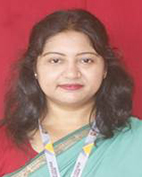
DR. KANKANA BHOWMICK
|
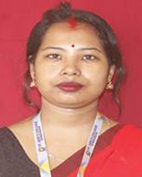
RIMI REKHA PHUKON
|

DAISY BORO
|

ANANYA CHAKRABORTY
|

ADITYA GOYARY
|
|
FACULTY RECHARGING STRATEGIES
|
|
NAME
|
QUALIFICATION
|
ACHIEVEMENT
|
|
DR. KANKANA BHOWMICK
|
M.A, B.ED, SLET, PHD
|
Seminar-6
Workshop-1
Publication-5
|
|
RIMI REKHA PHUKON
|
M.A, NET
|
Seminar-8
Conference-2
Publication-5
|
|
DAISY BORO
|
M.A, NET
|
Seminar-6
|
|
ANANYA CHAKRABORTY
|
M.A, B.ED
|
Seminar-5
Conference-1
|
|
ADITYA GOYARY
|
M.A, NET
|
Seminar-1
Conference-2
Workshop-3
|
PROGRAMME SPECIFIC OUTCOME
-
Educate students in both the artistry and utility of the English
language through the study of literature and other contemporary forms of
culture.
Provide students with the critical faculties necessary in an
academic environment, on the job, and in an increasingly complex,
interdependent world.
Graduate students who are capable of performing research, analysis,
and criticism of literary and cultural texts from different historical
periods and genres.
Assist students in the development of intellectual flexibility,
creativity, and cultural literacy so that they may engage in life-long
learning.
Students should be able to identify, analyze, interpret and describe
the critical ideas, values, and themes that appear in literary and cultural
texts and understand the way these ideas, values, and themes inform and
impact culture and society, both now and in the past.
Students should be able to write analytically in a variety of
formats, including essays, research papers, reflective writing, and critical
reviews of secondary sources.
FYUGP COURSE
Semester – I
|
Sl. no.
|
Course Code
|
Course Title
|
Course Outcome
|
|
1.
|
COMMAJ101-4
|
History of English Literature
|
Students will get to understand the historical,
political, cultural, and social background that shaped the
History of English Literature. They will become familiar
about the beginning of the English literature.
|
|
2.
|
ENGAEC101-2
|
English Communication-1
|
Enhance students’ proficiency in English
communication, focusing on listening, speaking, reading,
and writing skills.
Develop students’ ability to express ideas clearly
and effectively in academic and professional contexts.
Equip learners with essential soft skills such as
interpersonal communication, teamwork, and presentation.
Improve pronunciation, vocabulary, and grammatical
accuracy for better communicative competence.
|
Semester – II
|
Sl. no.
|
Course Code
|
Course Title
|
|
|
1
|
ENGAEC102-2
|
English Communication-2
|
*Enhancing communication skills along with
language and presentation skills of the students;
*To participate in group discussions, meetings
and interviews;
*To draft Official Letters, Notices, Agendas,
Résumé and Minutes effectively.
|
|
2
|
ENGMAJ102-4
|
Poetry and Drama- 14th to 18th Century
|
* To understand the wide and diverse range of
social, historical and cultural perspectives on writing
drama and composing poetry.
* To know the historical context, social settings
and cultural influence that remain in the background of
any poem or drama.
* To develop an overall knowledge of 18th and
19th-century poetry and drama and the writers'
contribution to that particular period.
|
Semester – III
|
Sl. no.
|
Course Code
|
Course Title
|
Course Outcome
|
|
1
|
COMMAJ201-4
|
202-4 Classical Literature
|
To make students familiar with the trends of
Indian and Western classical literature.
To enable students to compare analytically
Indian and Western traditions of writings.
To make them interpret foundational Indian and
Western literary texts within their historical, cultural,
and philosophical contexts.
|
|
2
|
COMMAJ202-4
|
201-4 Classical Literary Criticism
|
To acquaint the students with classical forms
of criticism.
The students will be able to appreciate the
various schools of thought and forms of literary
criticism.
|
|
3
|
COMSEC202-3
|
Business communication
|
Students will be able to understand various
aspects of fundamental of communication skills
Students will be able to develop their
listening and speaking skills for better communication.
Students will be able to improve their reading
and writing skills
|
|
4
|
ENGAEC201-2
|
Academic Writing and Composition I
|
To introduce students to the key concepts of
Communication Process, Academic Writing and Composition.
To facilitate student’s individual growth by
equipping them with enhanced argumentative skills suitable
for academic, non-academic and technical professions.
To help them master the skills of drafting
various academic and technical writings like letters,
notices, agendas, minutes, memorandum, etc.
To enable them to understand the need of
employing appropriate academic vocabulary, tone, and style
suited to different audiences and disciplines.
|
Semester – IV
|
Sl. no.
|
Course Code
|
Course Title
|
Course Outcome
|
|
1
|
ENGMAJ203-4
|
Literary Criticism
|
*To equip the students with these tools and
provide a framework, and an approach to reading various
kinds of works.
* To help students understand the convergence of
the two and argue that it is not to be seen as a binary.
* To identify the theories and methods of
criticism. Students will be acquainted with the varied
dimensions of theoretical approaches.
|
|
2
|
ENGMAJ204-4
|
British Romantic Literature
|
*To inform students about the lasting impression
of the French Revolution on British writers.
*To identify the ideals of the French Revolution
and its lasting impact on world literature. They will
understand how literature can be instrumental to bring
social changes.
* To acquainted with ideas relating to
Environmental Humanities and critical approaches like Deep
Ecology and Ecocriticism.
|
|
3
|
ENGMAJ205-4
|
English Prose
|
* To acquaint the students with essay as an art
form. The contents of the course will introduce the
students to the styles and themes of essays.
* To develop the writing skills and critical
thinking ability of the students on a given topic.
|
|
4
|
ENGAEC202-2
|
Academic Writing and Composition 2
|
* To introduce students to the basic differences
between academic and non-academic writing and make them
familiar with the different conventions of academic writing.
*To present an effective writing strategy along
with the introduction of academic writing features like
arguments, facts, evidence, tone, patterns and practices.
*To master various approaches, methods and
techniques of academic writing.
|
Semester – V
|
Sl. no.
|
Course Code
|
Course Title
|
Course Outcome
|
|
1.
|
ENGMAJ301-4
|
Indian Writing in English
|
To develop critical thinking among students to
train them torecognize how writers negotiate cultural
values and Indian English literary traditions.
To enable students to critically analyze
literary texts by Indian authors writing in English,
identifying unique thematic concerns, such as identity,
nationalism, modernity etc.
To interpret literary representations of India
through various genres – novel, poetry, drama, and
nonfiction – and evaluate their contribution to both
Indian and global literary canon.
|
|
2.
|
ENGMAJ302-4
|
Modern European Drama
|
Familiarise students with the major trends and
movements in modern European drama.
Encourage critical understanding of playwrights
such as Ibsen, Shaw, Brecht, and Ionesco, highlighting
their influence on modern theatre.
Analyse dramatic techniques, themes, and the
socio-political concerns reflected in modern drama.
Foster appreciation of theatre as a medium of
social and philosophical exploration
|
|
3
|
ENGMAJ303-4
|
British Literature: 19 th Century
|
To develop the understanding of the salient
features of the 19 th Century British Literature.
To enhance the student’s ability to critically
analyze the text with the help of different theorists.
Analyze the various literary techniques used
in the literary works.
Familiarize the students with the different
socio- political, moral and intellectual issues presented
through the literature of the age.
|
|
4
|
ENGMAJ304-4
|
Rhetoric and Prosody
|
To acquaint the students with the various
figures of speech like simile, metaphor, metonymy, irony,
antithesis, personification, hyperbole, oxymoron, etc.
The students will also learn about meter,
rhythm and scansion in this course.
Students will be able to identify the use of
rhetorical devices in literary texts.
They will be able to scan poems and will learn
about the intonation used in reading poems.
They will be able to enhance their writing
skills as well
|
Semester – VI
|
Sl. no.
|
Course Code
|
Course Title
|
Course Outcome
|
|
1
|
ENGMAJ305-4
|
Critical Theory I
|
*To equip the students with these tools and
provide a framework, and an approach to reading various
kinds of works.
* To help students understand the convergence of
the two and argue that it is not to be seen as a binary.
*To identify the theories and methods of
criticism. Students will be acquainted with the varied
dimensions of theoretical approaches.
|
|
2
|
ENGMAJ306-4
|
British Literature: The Early 20th Century
|
*To understand the social moorings of the British society
that facilitated such epochal ruination of colonized
societies. Further, the world wars and their psychological
impact need to be understood as well.
*To familiarize the student with ideas such as
Colonialism, Racism, Psychoanalysis, Stream of
Consciousness, Modernism and Postmodernism.
*To critically interpret the texts through various
theoretical lenses. Students will be able to relate the
influence of such texts on Indian literature.
|
|
3
|
ENGMAJ307-4
|
Postcolonial Literature
|
*To be understood as a distinct approach from
decolonial studies. The course will familiarize the
students with essays and fictional works from postcolonial
countries in the postcolonial context.
*To identify the systemic continuation of
colonial structures and their influence in the present
times. Read in conjunction with decolonial studies, students
will be able to differentiate between the two.
|
|
4
|
ENGMAJ308-4
|
American Literature
|
*To introduce the students to the American
Literary Tradition that grew as a distinct area.
*To identify the challenges of the American
Dream and its social issues.
|
BEST PRACTICES
-
Observation of the important national and international Literary Events.
-
Conducting Departmental meetings every month by discussing the progress
of the syllabus and internal assessment.
-
Conducting competition like – Debate, Speech, Story Writing &Poetry
Writing competition.
-
Attending Literary Fest at BodolandUniversity, Book Fair at Cultural
Complex & Educational Visit to Raimona National Park.
-
Conducting & attending Workshops and Seminars.
-
Conducting Internship and Presentations.

VISION:
Empowering Communication Through Creative Learning.
MISSION:
Inspiring Imagination, Insightand Expression.
ESTABLISHMENT:
|
Degree
|
Course
|
Established Year
|
|
PG
|
M.A. ENGLISH
|
2020
|
ABOUT THE DEPARTMENT:
Affiliation: Bodoland University.
Location: Balagaon, Kokrajhar, Assam.
Establishment Year: 2016
Objective: The department aims to inspire students for
a deep appreciation of literature by nurturing critical thinking,
creativity and cultural awareness.
Curriculum Focus: The curriculum is designed to equip
students to focus on communication, creativity and critical thinking.
Ultimately, its focus is to empower students to use English not only for
academic success but also for real life communication, intercultural
understanding and a lifelong learning.
Digital Skills: The college as a whole often emphasizes
enhancing digital skills, modern teaching method are integrated to make
learning interactive and meaningful.
|
ENGLISH DEPARTMENT FACULTY MEMBERS
|
DR. KANKANA BHOWMICK
|
RIMI REKHA PHUKON
|
DAISY BORO
|
ANANYA CHAKRABORTY
|
ADITYA GOYARY
|
|
FACULTY RECHARGING STRATEGIES
|
|
NAME
|
QUALIFICATION
|
ACHIEVEMENT
|
|
DR.KANKANA BHOWMICK
|
M.A, B.ED, SLET, PHD
|
Seminar-6
Workshop-1
Publication-5
|
|
RIMI REKHA PHUKON
|
M.A, NET
|
Seminar-8
Conference-2
Publication-5
|
|
DAISY BORO
|
M.A, NET
|
Seminar-6
|
|
ANANYA CHAKRABORTY
|
M.A, B.ED
|
Seminar-5
Conference-1
|
|
ADITYA GOYARY
|
M.A, NET
|
Seminar-1
Conference-2
Workshop-3
|
PROGRAMME SPECIFIC OUTCOME
-
Educate students in both the artistry and utility of the English
language through the study of literature and other contemporary forms of
culture.
-
Provide students with the critical faculties necessary in an
academic environment, on the job, and in an increasingly complex,
interdependent world.
-
Graduate students who are capable of performing research,
analysis, and criticism of literary and cultural texts from different
historical periods and genres.
-
Assist students in the development of intellectual flexibility,
creativity, and cultural literacy so that they may engage in life-long
learning.
-
Students should be able to identify, analyze, interpret and
describe the critical ideas, values, and themes that appear in literary
and cultural texts and understand the way these ideas, values, and
themes inform and impact culture and society, both now and in the past.
-
Students should be able to write analytically in a variety of
formats, including essays, research papers, reflective writing, and
critical reviews of secondary sources.
PG COURSE
Semester I
|
Sl. no.
|
Course Code
|
Course Title
|
Course Outcome
|
|
1
|
ENGADL14014
|
English Poetry in Context
|
To build the understanding of the
different forms and techniques used in poetic
compositions and their development in different periods
of time.
Through the poetry students will get to
know the different literary movements related to the
poetic composition.
The study will also help the students to
enhance their ability to analyze texts critically.
|
|
2
|
ENGADL14024
|
English Drama in context
|
Students will understand about the historical,
political, cultural and social background of the plays
written in various literary periods.
|
|
3
|
ENGADL14034
|
Linguistics
|
Students will gain a clear understanding of language
and its structure. They will also become familiar with
the main branches and key concepts of Linguistics.
|
|
4
|
ENGADL14044
|
Research Methodology – II
|
To understand the meaning, types, and
significance of research and recognize the importance
of academic integrity in research.
To formulate clear and focused research
questions in the field of literature, language, and
cultural studies, demonstrating intellectual curiosity
and relevance.
To generate knowledge from research,
demonstrating ability to contribute significantly to
the scholarly discourse and academic growth.
|
|
5
|
ENGADL14054
|
Studies in Environmental Humanities
|
The students will be conscious of the
diverse global traditions and ecological crises
They will be well acquainted with
environmental critical thinking and intellectual
traditions regarding ecological crises.
The students would be reoriented about the
earth and they would be skilful enough to appreciate
emphatically all the human traditions in the light of
environmental problems
|
Semester II
|
Sl. no.
|
Course Code
|
Course Title
|
Course Outcome
|
|
1
|
ENGADL14064
|
English Novel in Context
|
To teach English PG students the genre of
English fiction in the context of the Victorian and
contemporary world.
To understand and apply narrative theory
in the analysis of English novels
To critically evaluate narratives,
identifying themes, complex characters, and the
interplay of social dynamics.
|
|
2
|
ENGADL14074
|
Criticism and Theory
|
To equip the students with these tools and
provide a framework, and an approach to reading various
kinds of works.
To help students understand the
convergence of the two and argue that it is not to be
seen as a binary.
To identify and differentiate different
theories and methods of criticism.
|
|
3
|
ENGADL14084
|
Decolonial Studies II
|
To understand decolonial approaches,
distinguishing it from postcolonialism, and comprehend
the growth of decolonial studies.
To examine the interplay of coloniality,
feminism, modernity, and indigenous identities, with a
focus on decolonial interventions.
To examine the key issues and developments
within decolonial studies, while imparting a holistic
approach to global ethics and globalization.
|
|
4
|
ENGADL14094
|
Modern Drama-II
|
To introduce the learners to some of the
most important plays of modern times from different
parts of the world.
To understand the historical, cultural,
and theoretical baggage contained in and around a play.
To understand how the formative aspects of
play-making influence meanings and vice versa.
|
|
5
|
ENGADL14104
|
Women’s Writing
|
To highlight the richness and complexity
of women's experiences, female subaltern voices and
struggles for identity.
To critique central themes in selected
feminist fiction, demonstrating comprehension of
narrative techniques and character development.
To synthesize and draw connections between
the studied literary works and Feminist theories,
creating an academic discussion.
|
Semester III
|
Sl. no.
|
Course Code
|
Course Title
|
Course Outcome
|
|
1
|
ENGSPL25014
|
Critical Theory
|
Students will be able to recognize and
discuss key concepts and trajectories of critical theory
grounded in historical, social, and cultural contexts.
They will be capable of analysing and
critiquing constructions of nationhood, cultural
identities, and the concept of 'other' in the
framework of critical theory.
They will gain skills to critique
narratives from feminist perspectives and assess the
role of Critical Theory in challenging traditional
paradigms.
They will be able to apply critical
theories to analyse, interpret, and critique literary
texts, providing new insights and explorations.
They will be able to explore and critique
the posthumanism paradigm in response to the limitations
of traditional humanities
|
|
2
|
ENGSPL25024
|
Indian Writing in English - II
|
To make learners competent to interpret Indian
critical thinking and English intellectual traditions,
the interface of the West and the East, and Indian
cultural ethos.
To make learners trace the evolution of Indian English
literature from colonial mimicry to postcolonial
mastery, mapping key moments, movements, and voices.
To enable the students to analyze the politics of
language, particularly how Indian writers repurpose
English to reflect native thought patterns,
perspectives, and worldviews.
|
|
3
|
ENGSPL25034
|
Gender Studies
|
Students will understand how gender roles and
identities are shaped by society and culture. They will
also learn to apply gender theories to analyze and
critique literary and media texts.
|
|
4
|
ENGSPL25044
|
Modern European Literature in Translation
|
To identify and differentiate between the
socio-political and historical movements that have
conditioned the artistic and literary landscape of
Europe during the nineteenth and twentieth centuries.
To develop an understanding of the literary and
philosophical environment of Europe and their impact in
literary works.
To enhance the ability to critically analysethe
texts.
|
|
5
|
ENGSPL25054
|
African Literature
|
Students will understand how African Literature and
its historical significance were shaped by society and
culture. They will also learn to apply post-colonial
theories, and other literary theories to analyze the
literary texts.
|
Semester IV
|
Sl. no.
|
Course Code
|
Course Title
|
Course Outcome
|
|
1
|
ENGSPL25064
|
Translation Studies
|
To identify and assess the influence and impact of
culture in translation processes.
To recognize and evaluate the concepts and nuances
of postcolonial translation.
To apply key translation theories and techniques in
practical contexts, enhancing translative
competencies.
|
|
2
|
ENGSPL25074
|
American Literature-II
|
To understand and interpret the depth and diversity
of American literature, keeping in mind the history
and culture of the United States of America.
To identify and differentiate various forms of
writing and how the socio-political scenario of the
land influences its literature.
|
|
3
|
ENGSPL25074
|
Contemporary South Asian Fiction
|
To acquire a sense of the socio-cultural,
political, and historical development of the South
Asian nations as presented in the respective novels set
in the context of these locations.
To critique the representation of the various
sociocultural, and political developments
characterizing the South Asian nations so that they can
better connect and infer the political and historical
movements.
To develop ideas associated with different
scholarly discourses like Partition Studies and Trauma
Studies, along with various discourses on the nation,
narration, nationalism, etc. and interpret the novels
prescribed in this paper.
|
|
4
|
ENGSPL25094
|
Comparative Literature
|
To understand key concepts and historical
development of Comparative Literature.
To analyse how Comparative Literature engages with
and critiques post-colonial identities and narratives.
To evaluate the importance of Comparative
Literature in shaping world literature and cultural
studies, with exposure to renowned criticisms.
|
|
5
|
ENGSPL25104(B)
|
Literature from Assam in English Translation-II
|
To delve deep into the literary works produced in
the region to help engage in critical assessment of
the works and understand how literature can reflect
the society, culture, politics, and history of a region.
To interpret, analyse, and examine their own lived
experiences through the texts.
To offer the students a glimpse of different
socio-historical moments as well as the diverse
literary expressions conditioned by the cultural
diversity of Assam.
|
BEST PRACTICES
-
Observation of the important national and international Literary
Events.
-
Conducting Departmental meetings every month by discussing the
progress of the syllabus and internal assessment.
-
Conducting competition like – Debate, Speech, Story Writing
&Poetry WritingCompetition.
-
Attending Literary Fest at BodolandUniversity, Book Fair at Cultural
Complex & Educational Visit to Raimona National Park.
-
Conducting & attending Workshops and Seminars.
-
Conducting Internship and Presentations.

MOTTO:
Interpreting The Past, Inspiring The Future
VISION:
To Foster Critical Thinking, Historical Awareness, And Research
Aptitude Among Students By Exploring India’s And The World’s Past,
Promoting Scholarly Excellence, And Preserving Cultural Heritage For
An Informed And Responsible Society.
MISSION:
The History Department Aims To Provide Comprehensive Historical
Knowledge, Develop Critical Thinking And Research Skills, Promote
Preservation Of Heritage, Encourage Interdisciplinary Learning, And
Prepare Students To Be Informed, Responsible, And Culturally Aware
Citizens.
ESTABLISHMENT:
|
Degree
|
Course
|
Established Year
|
|
UG
|
BA. HISTORY
|
2016
|
ABOUT THE DEPARTMENT:
The Department of
History at St. Ann’s College, Balagaon, Kokrajhar established in
2016, offers a Four-Year Undergraduate Programme (FYUGP) under NEP
2020, affiliated to Bodoland University. Established to promote
value-based and quality education in the field of history, the
department is committed to developing critical thinking, historical
awareness about Indian History (Ancient, Medieval and Modern) also
the regional History of Assam, and social responsibility among
students. With a team of three dedicated faculty members, the
department ensures personalized academic guidance and student
support.
Teaching is enriched through classroom lectures, discussions, field
visits, heritage awareness programmes, and project-based learning.
The department also encourages students to explore local and
regional history, especially the cultural and historical heritage of
Assam and Northeast India. Upholding the mission and vision of St.
Ann’s College, the Department of History strives to shape informed,
disciplined, and responsible citizens who can contribute
meaningfully to society.
|
HISTORY DEPARTMENT FACULTY MEMBERS
|
WINSTON BASUMATARY
|

CHALINI BASUMATARY
|
ANZIMA BORO
|
|
FACULTY RECHARGING STRATEGIES
|
|
NAME
|
QUALIFICATION
|
ACHIEVEMENT
|
|
WINSTON BASUMATARY
|
M.A
|
FDP- 02
Seminar-02
Workshop – 01
Paper Presentation- 01
|
|
CHALINI BASUMATARY
|
M.A, NET
|
Seminar – 1
|
|
ANZIMA BORO
|
M.A, M.PHIL
|
|
PROGRAMME SPECIFIC OUTCOME:
-
Historical Knowledge and Understanding:
Develops a comprehensive understanding of Indian and world
history from prehistoric times to the modern period, with a
clear grasp of historical continuity, change, and the evolution
of human societies.
-
Critical and Analytical Thinking: Analyzes
historical events, processes, and debates using critical
reasoning, interpretation of historical evidence, and evaluation
of multiple perspectives to form logical and balanced arguments.
-
Research and Historiography Skills: Applies
historical research methods by using primary and secondary
sources, engage with historiographical interpretations, and
produce academic writing through projects, field studies, and
dissertations.
-
Regional, National and Global Awareness:
Demonstrates an informed understanding of regional
history—especially Northeast India and Assam—along with national
and global historical developments, fostering cultural awareness
and identity.
-
Ethical and Responsible Citizenship: Develops
social sensitivity, secular values, and an understanding of
heritage conservation and human rights, preparing students for
responsible roles in society and nation-building.
-
Career Competency and Application of Knowledge:
Equips students with historical knowledge and transferable
skills relevant to careers in education, civil services,
archaeology, archives, museums, tourism, heritage management and
research institutions.
FYUGP COURSE
Semester – I
|
Sl. no.
|
|
Course Title
|
Course Outcome
|
|
1
|
HISMAJ101-4
|
Introduction To Ancient Indian History
|
After the completion of this course,
it will help students to explore India’s early
journey from stone-age cultures to urban Indus
life, powerful empires like Mauryas and Guptas, and
regional kingdoms, building historical awareness and
critical understanding.
|
|
2
|
HISMIN101-4
|
History Of Ancient Indian Civilisation
(Minor)
|
This course introduces students to the
roots of Indian civilization, from early cultural
beginnings and Harappan life to Chalcolithic
cultures and Vedic society, helping them understand
India’s social, economic and cultural evolution.
|
Semester - II
|
Sl. no.
|
|
Course Title
|
Course Outcome
|
|
1
|
HISMAJ102-4
|
Introduction To Medieval Indian History
|
This course explores the dynamic transformation of
medieval India: from the rise of the Delhi Sultanate
and Mughal Empire to powerful regional states and
the arrival of Europeans. Students will be able to
grasp key political changes, administration,
cultural developments and their lasting historical
impact.
|
|
2
|
HISMIN102-4
|
Ancient Indian History (Society, Polity &
Economy)
(Minor)
|
This paper traces early state
formation in India through the Mahajanapadas,
foreign invasions, and the Maurya and Gupta
Empires. By the end of the course, students will
learn about political evolution, social structure,
economy and administration in ancient India and
develop a foundational understanding of historical
continuity and change.
|
Semester - III
|
Sl. no.
|
|
Course Title
|
Course Outcome
|
|
1
|
HISMAJ201-4
|
Introduction To Modern Indian History.
|
The students will be able to learn the
history of modern India. They will learn the
beginning of colonialism in India, colonial
policies, policy of expansion and consolidation.
Thus, this course will enlighten the students with
British policies towards native rulers of India
from 1757 onwards till independence in 1947.
|
|
2
|
HISMAJ202-4
|
National Movement Of India
|
This course explores the rise of
Indian nationalism and its various phases: from
early political awakening to Gandhian movements -
highlighting colonial policies, people’s resistance,
and India’s path to independence. Students will
gain deep insight into the freedom struggle and
develop analytical skills valuable for academics and
competitive examinations.
|
|
3
|
HISMIN201-4
|
Medieval Indian History (Society, Polity And
Economy)
(Minor)
|
This course examines the political,
social, and economic developments of medieval India
under the Delhi Sultanate and Mughal Empire
through literary and archaeological sources. It
explores administration, kingship, religious
policies, and gender dynamics.
By the end of the syllabus, students will be
able to analyze the structure of medieval
Indian polity, understand socio-economic
patterns, and assess the legacies of Sultanate
and Mughal governance.
|
Semester - IV
|
Sl. no.
|
|
Course Title
|
Course Outcome
|
|
1
|
HISMAJ203-4
|
Concept And Method Of History
|
Students will gain a clear
understanding of the meaning, scope, and purpose of
history and its relation with other disciplines.
They will learn to critically evaluate
archaeological and literary sources, understand
different historical methods and traditions of
history writing across cultures, and develop
analytical skills to interpret past events
objectively. The course will also help them
appreciate how diverse societies recorded and
understood their own histories.
|
|
2
|
HISMAJ204-4
|
Pre And Proto History Of India
|
The students will be able to learn the
stages of evolution of society and tools. They will
learn the emergence of first urbanization in the
Indian subcontinent. Thus, this course will
enlighten the students from a hunting and gathering
to an urban civilization on the bank of Sindhu
River and its tributaries.
|
|
3
|
HISMAJ205-4
|
History Of Assam (Earliest To 1228 Ad)
|
Students will develop a comprehensive
understanding of Assam’s early history, including
its state formations, social and economic
structures, and post-Pala political developments.
They will learn to critically analyze archaeological
and literary sources and understand the impact of
invasions and regional powers on the Brahmaputra
valley.
|
|
4
|
HISMIN202-4
|
Modern Indian History (Society, Polity And
Economy)
(Minor)
|
Students will understand India’s
mid-18th century social, political, and economic
conditions, British colonial expansion and
policies, pre-colonial and colonial economic
changes, and the impact of the Indian Renaissance
and reform movements on society and nationalism.
|
Semester - V
|
Sl. no.
|
|
Course Title
|
Course Outcome
|
|
1
|
HISMAJ301-4
|
History Of India (C. 1500 Bc To C. 200 Bc)
|
Students will understand the origins,
society, and political structures of the Aryans, the
Vedas and Vedic period, the evolution of northern
Indian states, and the rise of Magadha and the
Mauryan Empire. They will learn to analyze
socio-economic, religious, and cultural
developments, Mauryan administration, and Ashoka’s
role in spreading Buddhism.
|
|
2
|
HISMAJ302-4
|
History Of India (C. 200 Bc To C. 1206 Ad)
|
Students will understand the
post-Mauryan political landscape, including the
Indo-Greeks, Sakas, Pahlavas, and the rise of the
Gupta and Vardhana dynasties. They will learn about
Gupta administration, socio-economic life,
culture, and foreign influences, as well as
Harsha’s reign and the Arab invasion, developing
skills to analyze historical continuity, state
formation, and cultural transformations.
|
|
3
|
HISMAJ303-4
|
History Of India (1206 To 1526) Ad
|
This course helps students understand
the major sources of medieval Indian history and the
rise, administration, and decline of the Delhi
Sultanate. It also explains regional kingdoms and
the social, cultural, and religious developments of
the period. Students gain clear knowledge of
politics, society, economy, and architecture of
medieval India.
|
|
4
|
HISMAJ304-4
|
History Of Assam (1228-1826)Ad
|
This course enables students to understand the
literary and archaeological sources of North East
Indian history, the Ahom and Koch kingdoms, their
political relations, and the social, economic, and
religious developments that shaped the region’s
historical identity.
|
|
5
|
HISMIN301-4
|
India’s Foreign Policy (Minor)
|
This course helps students understand
the concept, meaning, and determinants of foreign
policy, India’s relations with neighbouring
countries and major powers, and key diplomatic
approaches like the Gujral Doctrine, Act East
Policy, and Indian Ocean strategy.
|
Semester - VI
|
Sl. no.
|
|
Course Title
|
Course Outcome
|
|
1
|
HISMAJ305-4
|
History Of India (1526 To 1757)
|
This course helps students understand
Mughal political supremacy, administration,
socio-religious policies, regional relations, and
the rise of new powers, along with the arrival of
European traders and their impact on India’s
political, social, and cultural history.
|
|
2
|
HISMAJ306-4
|
Political History Of India (1757-1885)
|
This course enables students to
understand modern Indian historiography, British
expansion and administration, relations with major
Indian states, and the nature and impact of the
Revolt of 1857, highlighting key economic,
political, and social transformations.
|
|
3
|
HISMAJ307-4
|
History Of India (1857-1947)
|
This course helps students understand
key administrative, educational, judicial, and
health reforms introduced under the British Crown,
highlighting major institutional changes that
shaped modern governance and public systems in
India.
|
|
4
|
HISMAJ308-4
|
History Of Assam (1826-1947)
|
This course helps students understand
British expansion in the North East, the rise of
political consciousness, freedom struggles, and
major socio-economic and religious reform
movements, along with their overall impact on the
region.
|
|
5
|
HISMIN302-4
|
History Of Assam (1826-1947) Socio-Religious
Movements In Assam
|
This course helps students understand
Assam’s socio-cultural developments, major
reformers, emerging socio-political organizations,
and the cultural, literary, and economic
contributions of the Bodos, highlighting key
movements that shaped regional identity and social
change.
|
BEST PRACTICES:
-
Interactive Teaching Methods: Use storytelling,
debates, and multimedia resources to make historical concepts
engaging and relatable for students.
-
Research and Publication Encouragement: Motivate
students and faculty to conduct research, publish papers, and
present at seminars and conferences.
-
Field Visits and Archival Studies: Organize
museum visits, historical site tours, and archival research trips to
provide hands-on learning experiences.
-
Interdisciplinary Approach: Integrate insights
from archaeology, sociology, political science, and anthropology to
provide a holistic understanding of history.
-
Student-Centric Activities: Conduct workshops,
quizzes, essay competitions, and history clubs to promote active
learning, critical thinking, and historical awareness.

MOTTO:
“Governing Ideas, Shaping Tomorrow”
VISION:
Fosters Understanding Of Democratic Principles, Human Rights, Social
Justice, And The Rule Of Law While Encouraging Active Citizenship
And Civic Responsibility.
MISSION:
Foster critical thinking and analytical skills essential for
understanding political systems and processes.
Prepare students for meaningful careers in public service, law,
policy analysis, international relations, and civic leadership.
Promote democratic values, social justice, and ethical
governance.
Create an inclusive academic community that values diverse
perspectives and encourages open dialogue on political issues.
ESTABLISHMENT:
|
Degree
|
Course
|
Established Year
|
|
UG
|
BA.POLITICAL SCIENCE(HONOURS)
|
2016
|
ABOUT THE DEPARTMENT:
The Department of Political Science of St. Ann’s College,Kokrajhar
was established in the year 2016. The Department offers UG degrees
at BA(Honours) level affiliated to Bodoland University. With four
faculty members in the department, we provide intensive mentoring to
our students both in and beyond the classroom in a wide variety of
forums. Ongoing lectures, film screenings, departmental seminars and
various competitions on interdisciplinary themes make up our
calendar. As we look forward, the Political Science department
remains committed to its mission of inculcating good values and
aesthetics through Literature.
| POLITICAL SCIENCE DEPARTMENT FACULTY MEMBERS |
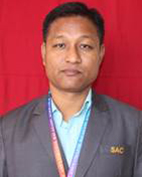
UTPALGWRA BRAHMA
|

ELIZABETH BRAHMA
|

RIYA CHAKRABORTY
|
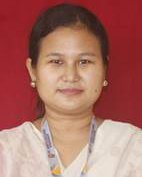
BUBULI GOYARY
|
|
FACULTY RECHARGING STRATEGIES
|
|
NAME
|
QUALIFICATION
|
ACHIEVEMENT
|
|
UTPALGWRA BRAHMA
|
M.A.
|
Seminar –3
Workshop – 1
|
|
ELIZABETH BRAHMA
|
M.A., M.Ed
|
Seminar – 5
Workshop – 1
|
|
RIYA CHAKRABORTY
|
M.A., SLET
|
Seminar – 4
Workshop – 1
|
|
BUBULI GOYARY
|
M.A.,NET, M.Phil
|
Seminar –
Workshop –
Conference –
Publication -
|
PROGRAMME SPECIFIC OUTCOME
-
Demonstrate comprehensive knowledge of political systems,
institutions, processes, and behaviors at local, national, and
international levels
-
Analyze complex political issues, events, and phenomena using
appropriate theoretical frameworks and conceptual tools.
-
Apply comparative methods to study political systems and phenomena
across different contexts
-
Articulate political ideas, arguments, and research findings clearly
and persuasively in written and oral forms
-
Appreciate cultural, historical, and contextual factors that shape
political development
-
Demonstrate understanding of democratic principles, constitutional
rights, and rule of law
FYUGP COURSE
Semester – I
|
Sl. no.
|
Paper Code
|
Course Title
|
Course Outcome
|
|
1.
|
PSCMAJ101-4
|
Introduction to Political Science
|
Students will be able to define and
explain fundamental political science concepts such
as power, authority, legitimacy, sovereignty,
democracy, authoritarianism, ideology, and political
culture.
Students will be able to apply
theoretical concepts to analyze contemporary
political events, issues, and debates in local,
national, and international contexts.
|
|
2.
|
PSCMIN101-4
|
Basic Concepts of Political Science
|
Students will gain knowledge of
different forms of government (democracy,
authoritarianism, totalitarianism, monarchy, etc.)
and be able to compare and contrast various
political systems and their functioning.
Students will be able to compare
different political ideologies (liberalism,
conservatism, socialism, fascism, etc.) and
understand their historical contexts and
contemporary relevance.
|
|
3.
|
PSCSEC101-4
|
Legislative Procedure
|
It will motivate students to believe
in their leadership quality to apply in their
day-to-day life or in a purposeful career.
It will enhance their capacity within
and outside to deal the ordeal of the society and
life.
The course will encourage students to
handle the conflict situation and enhance them to
come into resolution.
Students will be aware of EQ/IQ how
these emotional quotients can be handled
positively.
|
Semester - II
|
Sl. no.
|
Paper Code
|
Course Title
|
Course Outcome
|
|
1.
|
PSCMAJ102-4
|
Constitutional Development of India
|
Students will be able to trace the evolution
of constitutional governance in India from the
colonial period through independence to the
present day. This includes understanding key
legislative acts like the Regulating Act of 1773,
Charter Acts, Government of India Acts (1919,
1935), and the Indian Independence Act of 1947.
Students will understand the structure,
powers, and functions of key constitutional
institutions including the Executive (President,
Prime Minister, Council of Ministers), Legislature
(Parliament, State Legislatures), and Judiciary
(Supreme Court, High Courts).
|
|
2.
|
PSCMIN102-4
|
Idea of Democracy
|
Students learn to identify and explain core
democratic values such as equality, liberty, popular
sovereignty, rule of law, and human rights. They
understand how these principles form the
foundation of democratic systems.
Students analyze different models of
democracy (representative, direct, participatory,
deliberative) and compare democratic and
non-democratic systems, understanding the strengths
and limitations of each.
|
|
3.
|
PSCSEC102-3
|
Your Laws, Your Rights
|
Understand their fundamental legal rights as
citizens
Recognize common legal issues in everyday
life (housing, employment, consumer rights)
|
Semester – III
|
Sl. no.
|
Paper Code
|
Course Title
|
Course Outcome
|
|
1.
|
PSCMAJ201-4
|
Political Theory
|
Students will be able to:
Demonstrate a comprehensive understanding of
key political theories and concepts.
Analyze critically and evaluate political
theories and arguments.
Apply political theory to contemporary
issues.
Engage in informed and articulate
discussions on political theory.
|
|
2.
|
PSCMAJ202-4
|
Indian Government and Politics
|
This course enables students to
develop an understanding of the basic features of
the Indian constitution and institutional
functioning as well as appreciate the approaches to
the study of Indian politics and the changing
nature of the state.
It enables them to understand the
working of different organs of government and the
interaction among them which often involves both
conflict and cooperation.
It enables the students to understand
the division of powers in the Indian federal set-up
and its asymmetrical federal arrangements. Course
Outline:
|
|
3.
|
PSCMIN201-4
|
Politics in India
|
The student will be able to understand
the various approaches to Indian Politics.
Understand the workings of Indian
Politics, the constitutional structure, evolution
and working of different Political parties etc.
The students will be able to
understand various issues and challenges that
surfaced in Indian politics.
|
|
4.
|
PSCSEC201-3
|
Leadership and Capacity Building Skill
|
It will motivate students to believe in
their leadership quality to apply in their
day-to-day life or in a purposeful career.
It will enhance their capacity within and
outside to deal the ordeal of the society and life.
The course will encourage students to
handle the conflict situation and enhance them to
come into resolution.
|
Semester – IV
|
Sl. no.
|
Paper Code
|
Course Title
|
Course Outcome
|
|
1.
|
PSCMAJ203-4
|
The Indian Political Thought
|
The students will be able to:
Know the broader trends in ancient and
medieval Indian Political thought.
Comprehend the contributions of Manu and
Kautilya to ancient Indian thought.
Identify broader contours of Medieval
Indian Thought with reference to Hindu political
thought on state, government, sovereign and social
laws.
Additionally, understand the Bhakti
tradition contribution of Kabir as well as the
contribution of Islamic text to medieval Indian
thought, particularly of Barani, Abul Fazl.
|
|
2.
|
PSCMAJ204-4
|
International Relations
|
Students will be able to:
Understand key concepts and concerns in
international relations including the way power is
acquired and used globally and how states and
non-states actors interact.
Become conversant in current international
events through a close reading of the news and
interpretation of events through international
relations theories and concepts.
Become familiar with key concept and
theories of international relations to use as
lenses to differently explain outcomes and events in
world affairs.
|
|
3.
|
PSCMAJ205-4
|
Introduction to Public Administration
|
To familiarize student with the meaning,
nature, and significance of the discipline
To make students to understand the
evolution of public administration as an academic
discipline.
To understand how organizational principles
and organizational structure of the administration
is applied for effective deliverance of
administerial task.
Students will be acquainted with the key
concepts and recent trends that emerged in public
administration and how systems function in
delivering goods and services to people.
|
|
4.
|
PSCMIN202-4
|
Select Constitutions (UK, USA,China, Switzerland)
|
Grasp a deep and clear understanding of
different systems that function in various
countries.
Underst and different forms of governments,
principles such as separation of powers, checks
and balances.
Distinguish types of executives,
legislature and kinds of judiciary, democracy,
franchise and its values and importance.
|
Semester – V
|
Sl. no.
|
Paper Code
|
Course Title
|
Course Outcome
|
|
1.
|
PSCMAJ301-4
|
Western Political Thought
|
The students will:
Demonstrate understanding of key text and
ideas in western thought.
Critically analyse and evaluate different
political ideas and theories and their
implications.
Develop skills in arguing coherently about
political ideas and theories.
It enables them to grasp the social
universe of state and political philosophy that
shaped it through the various phases and stages of
history.
|
|
2.
|
PSCMAJ302-4
|
Foreign Policy of India
|
The course will enable the students to
understand the complexities involved in foreign
policy making.
The students will be able comprehend the
implications of India’s engagement with the world.
learning this course will enable student
the institutional practices involved in Indian
Foreign policy making and will help them to
develop capacity to reflect on new issues emerging
in India’s interactions with other states and
regional organisations.
|
|
3.
|
PSCMAJ303-4
|
Comparative Government & Politics
|
To make students understand the basic
concepts in comparative politics.
To understand, comprehend and analyze the
complex nature and functioning of the political
systems, political institutions and corresponding
issues to these both in a country specific case of
different country.
To enable students to have a comparative
analysis of countries related to their political
institutions and behavior.
|
|
4.
|
PSCMAJ304-4
|
Political Process in India
|
This course will enable students to develop
an understanding of the basic issues of the Indian
political process and institutional functioning and
the changing nature of the state and institutions.
It enables the students to understand the
working of different organs of government and the
interaction among them which often involves both
conflict and cooperation.
It enables the students to understand the
division of powers in the Indian federal set-up,
party system, movements, and the changing
elections, caste and communal issues.
|
|
5.
|
PSCMIN301-4
|
Environment & Politics
|
The outcome of this course will be basic
understanding of the concept of environment, eco
system and ecology.
The students will be able to understand
the present crisis of environment, related
movements, government policies and role of civil
society towards its protection.
|
Semester – VI
|
Sl. no.
|
Paper Code
|
Course Title
|
Course Outcome
|
|
1.
|
PSCMAJ305-4
|
Political Ideology
|
Students should be able to identify and
explain the core principles, historical development,
and key thinkers of major political ideologies
including liberalism, conservatism, socialism,
fascism, anarchism, feminism, and environmentalism.
They should understand how these
ideologies address fundamental questions about human
nature, the role of the state, economic
organization, and social justice.
|
|
2.
|
PSCMAJ306-4
|
Administrative Theories and approach
|
Aware about the evolution and growth of the
Administrative Theories and Approaches.
Learn the basic Approaches of Public
Administration. And, how the approaches to the
public administration have described the concepts
and principles of public administration with
scientific explanations and analysis.
Theoretically clear of the dynamics of both
Classical and Modern theories relating to Public
Administration.
|
|
3.
|
PSCMAJ307-4
|
Contemporary Issues in International Relations
|
Students would:
Gain an understanding of the contemporary
international system and different issues that
surrounds international relations.
Substantiate knowledge of the international
political economic system as it deals with relevant
issues occurring in field of international
relations, and also of international governmental
organisation and regional organisations and its
actions.
Understand the central issues that
challenge the current international relations.
Demonstrate awareness on the subject of
international relations.
|
|
4.
|
PSCMAJ308-4(B)
|
Issues & Institutions (Optional)
|
This course is being structured to provide
the basic understanding of the concept of human
rights and its relevance in the global and Indian
context.
The course covers various topics such as
the constitutional and institutional mechanisms for
protection of human rights.
|
|
5.
|
PSCMIN302-4
|
Nationalism in India
|
The course aims to help students
understand the beginning of nationalism in India. It
looks at the movement from different theoretical
perspectives that highlight its varied dimensions.
The course begins by looking at the
Indian responses to colonial dominance in the
nineteenth century and traces the development of
the anti-colonial struggle up to the mid-20th
century.
|
BEST PRACTICES:
-
Observation of Important National and International Events.
-
Departmental meetings every month.
-
Conducting competitions like Debate, Quiz and Extempore Speech.
-
Exposure visits and study tours.
-
Conducting and attending workshops and Departmental Seminars.
-
Conducting Internship and presentation.

MOTTO:
“Society in Mind, Humanity at Heart”
VISION:
To help students see the world with empathy, think critically about
change, and act for better future.
MISSION:
Our mission is to equip students with the knowledge, empathy, and
critical thinking skills to understand social life, challenge
injustice, and use sociological insights to built a more inclusive
and humane society.
ESTABLISHMENT:
|
Degree
|
Course
|
Established Year
|
|
UG
|
BA.SOCIOLOGY
|
2025
|
ABOUT THE DEPARTMENT:
With the effort and initiative of the Principal, Sr. Lavina Menezes,
the Department of Sociology was introduced and established in the
year 2023. The subject was initially offered at the Higher Secondary
level and as a minor subject in the Undergraduate courses. Later, it
was introduced as a Major subject at the Undergraduate level from
the year 2025.
The Department of Sociology at St. Ann’s College is committed to
fostering a deep and reflective understanding of society and human
behaviour. Established with the aim of exploring the patterns that
shape our social world, the department provides a strong academic
foundation in sociological theories, research methods, and
contemporary social issues. Through interactive learning, field
engagement, and critical inquiry, students are encouraged to analyse
and interpret the dynamic relationship between individuals and
society. The department strives to cultivate informed, empathetic,
and socially responsible citizens who can contribute thoughtfully to
a diverse and changing world.
|
SOCIOLOGY DEPARTMENT FACULTY MEMBERS
|

DEEPANJALI BASUMATARY
|
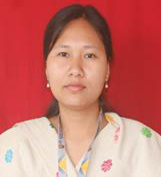
MERISA NARZARI
|
|
FACULTY RECHARGING STRATEGIES
|
|
NAME
|
QUALIFICATION
|
ACHIEVEMENT
|
|
MISS.DEEPANJALI BASUMATARY
|
M.A. (NET Qualified),B.Ed
|
Seminar –5
Workshop – 1
|
|
MISS. MERISANARZARI
|
M.A. (NET Qualified)
|
|
PROGRAMME SPECIFIC OUTCOME
-
Understanding Sociological Concepts: Students will be able to
understand and explain the key sociological concepts such as
society, culture, social structure, socialization, and institutions.
-
Sociological Theories: Gain knowledge of classical and contemporary
sociological theories (e.g., Marx, Durkheim, Weber, functionalism,
conflict theory, symbolic interactionism). Students will learn to
apply these theoretical frameworks to analyse social issues and
phenomena.
-
Social Institutions and Processes: Understand the functioning and
dynamics of major social institutions like family, education,
religion, economy, and polity. Learn to analyse how social change,
social control, and social stratification shape society.
-
Social Issues and Policies: Develop critical thinking ability to
examine existing social problems such as poverty, gender inequality,
caste discrimination, crime, and globalization. Evaluate the role of
public policies and welfare programs in addressing these issues.
-
Cultural and Social Diversity: Appreciate cultural diversity and
understand the importance of pluralism and inclusion in society.
Analyse how identity, race, ethnicity, and gender influence social
interactions.
-
Research Skills: Develop the ability to design and conduct
sociological research using both qualitative and quantitative
methods. Learn data collection, analysis, and interpretation
techniques relevant to social research. Understand ethical
considerations in social research.
-
Application of Sociological Knowledge: Apply sociological insights
to real-world situations, such as community development, social
work, and policy-making. Develop critical thinking and
problem-solving skills to address social challenges.
-
Employability Opportunities and Further Studies: Near the future it
is going to prepare the students for careers in social research,
public administration, NGOs, education, and human resource
management. Providing a vast career opportunities in the future.
FYUGP COURSE
Semester – I
|
Sl. no.
|
Paper Code
|
Course Title
|
Course Outcome
|
|
1.
|
SOCMAJ101-4
|
Introduction to Sociology
|
It will help students to have a general
understanding of the discipline and perspective
of Sociology.
The students will be able to think
sociologically and apply the sociological concepts
in real world.
To develop keen insights among students
to distinguish between the common-sense knowledge
and Sociological knowledge.
|
|
2.
|
SOCMIN101-4
|
Introduction to Sociology
|
This paper will help students to have
a general understanding of the discipline and
perspective of Sociology.
The course will enable students to
comprehend social reality through sociological
concepts.
|
|
3.
|
SOCVAC101-4
|
Indian society and culture
|
It will help students to develop an
understanding of social and cultural
environment.
It aims at helping students to develop an
understanding of societal and cultural
dimensions of the dynamic nature of
society and the environment in which they will
live.
|
Semester - II
|
Sl. no.
|
Paper code
|
Course Title
|
Course Outcome
|
|
1.
|
SOCMAJ 102-4
|
Sociology of India
|
The students will attain the
foundation of viewing images and ideas of India
through a sociological lens.
The students will develop critical and
analytical thinking through informed interrogation
of images, ideas, concepts and institutions of
India.
|
|
2.
|
SOCMIN102-4
|
Sociology of India
|
Students will understand key ideas,
institutions, and processes of Indian society.
Students will develop a critical and
comparative sociological perspective.
|
Semester - III
|
Sl. no.
|
Paper Code
|
Course Title
|
Course Outcome
|
|
1.
|
SOCMAJ201-4
|
Classical Sociological Thinkers
|
The course will help to understand the key
concepts and theories proposed by classical
sociological thinkers such as Karl Marx,
Max Weber, and Emile Durkheim.
Students will be able to apply classical
theories to analyze modern social issues.
|
|
2.
|
SOCMAJ202-4
|
Sociological Theoretical Perspective
|
Students will understand the origins
of key sociological theories.
Students will use these theories to
analyze current social issues.
|
|
3.
|
SOCMIN201-4
|
Classical Sociological Thinkers
|
The course will help to understand the
key concepts and theories proposed by classical
sociological thinkers such as Karl Marx, Max Weber,
and Emile Durkheim.
Students will be able to apply
classical theories to analyze modern social issues.
|
Semester - IV
|
Sl. no.
|
Paper Code
|
Course Title
|
Course Outcome
|
|
1.
|
SOCMAJ203-4
|
Indian Sociological Traditions
|
Students will gain a comprehensive
understanding of the historical, cultural, and
philosophical foundations of Indian sociology and
its distinctiveness from Western sociological
traditions.
Students will be able to identify and
analyze the structural inequalities, power
dynamics, and social
transformations in contemporary India.
Students will be able to articulate
informed perspectives on pressing social issues
and challenges.
|
|
2.
|
SOCMAJ204-4
|
Rural Sociology in India
|
Students will develop a comprehensive
understanding of the unique social structures and
dynamics present in rural communities.
Students will be able to critically
evaluate the factors influencing rural development
and propose effective strategies for sustainable
rural transformation.
|
|
3.
|
SOCMAJ205-4
|
Urban Sociology in India
|
Students will gain insight into the
diversity of urban cultures and identities, and
understand how they are shaped by urban environments
and social
interactions.
Students will identify and analyze
urban problems and propose informed solutions using
urban sociological perspectives.
|
|
4.
|
SOCMIN202-4
|
Indian Sociological Traditions
|
Students will understand the
foundations of Indian sociology and how it differs
from Western thought.
Students will analyze inequalities,
power dynamics, and social change in India.
|
|
5.
|
INT 201-2
|
Internship Program
|
Students will apply sociological
knowledge in their field experience.
Students will be able to explore the
sociological issues .
|
Semester – V
|
Sl. no.
|
Paper Code
|
Course Title
|
Course Outcome
|
|
1.
|
SOCMAJ301-4
|
Political Sociology
|
Familiarity with different theoretical
and conceptual issues in political sociology and
a capacity to use them to grasp political
phenomena in a cross-cultural and
comparative perspective.
Be able to understand the relationship
between state and society in shaping
politics in India both historically and
analytically.
|
|
2.
|
SOCMAJ302-4
|
Economic Sociology
|
Develops familiarity with different
theoretical and conceptual aspects of economic
sociology as a specialized branch of knowledge.
Develops abilities to generate
research questions and arguments about the
intersections of economy and society.
|
|
3.
|
SOCMAJ303-4
|
Sociology of Gender
|
Students will be able to articulate
the vocabulary of gender and understand the
nuances of the concepts they study.
Understanding issues relating to
gender both at a national and global level.
|
|
4.
|
SOCMAJ304-4
|
Sociology of Kinship
|
Students will be able toapply the
understanding of kinship terminologies, kinship
usage and behaviour, in studying the kinship
organization of different societies.
Develop an analytical perspective on
concepts relevant for understanding kinship.
|
|
5.
|
SOCMIN301-4
|
Sociology of Gender
|
An understanding of concepts such as
sex and gender by problematizing common-sensical
notions of gender.
Understanding issues relating to
gender both at a national and global level.
|
Semester - VI
|
Sl. no.
|
Paper Code
|
Course Title
|
Course Outcome
|
|
1.
|
SOCMAJ305-4
|
Industrial Sociology
|
The course will provide the students
with the ability to analyze the impact of
industrializationon society and individuals.
The course will enable students to
develop ideas and make critical analysis of the
process and development of industrial progress and
challenges of India.
|
|
2.
|
SOCMAJ306-4
|
Social Stratification
|
Students will be able to apply
sociological perspectives to understand social
inequality learn about the socio-historical context
of stratificationandcontemporary issues related to
inequalities and its forms.
Examining forms of stratification,
understanding the relevance of caste, race and
ethnic identities in
contemporary world.
|
|
3.
|
SOCMAJ307-4
|
Sociology of Religion
|
The course lays primacy to the
understanding of religious over individual
religions.
The course draws the linkage between
social and religious through different registers
mentioned in the course outline.
|
|
4.
|
SOCMAJ308-4
|
Health and Society in India
|
Students will be able to analyse the role of
social factors in the distribution of health and
access to healthcare.
Students will be able to link cogently
the different theoretical perspectives directed
towards understanding the socio-cultural dimension
of medicine, illness and the body.
|
|
5.
|
SOCMIN302-4
|
Social Stratification
|
Understanding of stratification and
theories would sensitize students to its various
sociological aspects, providing ample scope for
applied learning and application.
Examining forms of stratification,
understanding the relevance of caste, race and
ethnic identities in contemporary world.
|
BEST PRACTICES:
-
Mentorship Program
-
Remedial Classes and Group Study
-
Field study Projects
-
Community Surveys
-
Social Issue Discussions

MOTTO:
“Innovation is Our Tradition.
VISION:
"To develop future-ready professionals who act as catalysts for
change, achieving excellence in commerce through knowledge,
critical thinking, and ethical leadership."
MISSION:
"To create a nurturing environment that empowers students with
comprehensive knowledge, critical thinking, and leadership
skills for holistic personality development and excellence in
the field of commerce."
ESTABLISHMENT:
|
Degree
|
Course
|
Established Year
|
|
UG
|
B. COM
|
2023
|
ABOUT THE DEPARTMENT:
Affiliation: Bodoland University.
Location:Balagaon, Kokrajhar, Assam.
Establishment Year: 2023.
Objective: The department aims to prepare
students for the contemporary business world by imparting
knowledge in fields like finance, marketing, accounting, human
resources, and entrepreneurship.
Curriculum Focus: It is likely to offer
Undergraduate courses like the Bachelor of Commerce (B.Com) at
the Higher Secondary (H.S.) level and potentially at the degree
level. The curriculum is designed to equip students with a solid
foundation for careers in various industries and to encourage
lifelong learning.
Digital Skills: The college as a whole often
emphasizes enhancing digital skills, which may include offering
courses like Tally to students to make them more adaptable to
the industrial world.
|
FACULTY MEMBERS OF COMMERCE DEPERTMENT
|

SOMAINA BRAHMA
|

MONALISHA KHAKHLARI
|
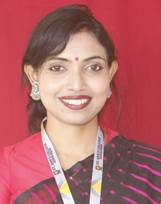
SATABDI CHAKRABORTY
|
|
FACULTY RECHARGING STRATEGIES
|
|
NAME
|
QUALIFICATION
|
ACHIEVEMENT
|
|
SOMAINA BRAHMA
|
M.COM, NET, B. ED
|
Webinar – 7
|
|
MONALISHAKHAKHLARI
|
M.COM, NET
|
Webinar – 7
Conference – 1
|
|
SATABDI CHAKRABORTY
|
MBA
|
Seminar – 3
Workshop – 1
|
PROGRAMME SPECIFIC OUTCOME:
-
Demonstrate Mastery of Core Commerce Concepts:
Apply fundamental principles and practices of Accounting,
Finance, Marketing, Management, and Economics to analyze
business performance and prepare and interpret financial
statements.
-
Ensure Statutory Compliance and Tax Proficiency:
Compute tax liabilities and demonstrate a working knowledge of
key business laws and regulations (such as Income Tax, GST,
Company Law, and Contract Act) to ensure legal and ethical
business operations.
-
Analyze and Facilitate Business Decision-Making:
Utilize analytical tools from Cost Accounting, Management
Accounting, and Economics to evaluate business problems, assess
opportunities, and support strategic decisions related to
finance, investment, and pricing.
-
Apply Specialized Knowledge in a Chosen Field:
Exhibit in-depth understanding and apply specialized techniques
in chosen elective areas such as Accounting & Finance,
Marketing, or Banking, enabling expertise in a specific domain
of commerce.
-
Leverage Technology for Business Solutions:
Effectively use relevant software (e.g., Tally, MS Excel) and
digital platforms for accounting, data analysis, and e-commerce,
understanding their critical role in the modern business
environment.
-
Exhibit Professional Competence and Ethical Conduct:
Communicate business ideas effectively, collaborate successfully
in teams, and demonstrate leadership, interpersonal skills, and
a strong sense of professional ethics and social responsibility.
-
Synthesize Learning for Career and Academic Advancement:
Integrate knowledge and skills acquired throughout the programme
to seamlessly transition into professional roles in accounting,
finance, and banking, or to pursue higher education and
professional qualifications (CA, CMA, CS, MBA).
FYUGP COURSE
Semester – I
|
Sl. no.
|
Paper Code
|
Course Title
|
Course Outcome
|
|
1.
|
COMMAJ101-4
|
Financial Accounting
|
Students will be able to apply
the generally accepted accounting
principles while recording transaction and
preparing financial statements. Students
will be able to understand Computerized
Accounting Systems. Students will be able
to measure business income applying relevant
accounting standard. Students will have
the knowledge of Calculation of Interest and
preparation of accounts for inland and
foreign branches. Students will be able to
prepare the accounts for Amalgamation and
Dissolution of Partnership Firms.
|
|
2.
|
COMMIN101-4
|
Entrepreneurship
|
Students will be able to
understand the functions of
entrepreneurship. Students will have the
idea of promotion of venture. Students will
know the various entrepreneurship
promoting institutions. Students will have
the knowledge of role of entrepreneurs in
nation building.
|
|
3.
|
COMVAC101-4
|
Indian Knowledge System
|
Students will be to know the Indian
knowledge system. Students will be to apply
the management principles from the Indian
perspectives. Students will be able
compare the Indian knowledge system with the
policies and schemes of the Government of
India.
|
|
4
|
COMSEC101-3
|
Computer Application in Business
|
Students will have the knowledge of
computer and develop computer skills.
Students will have the knowledge of
information technology tools for business
operations. Students will be able to use
software to solve business problems
|
|
5.
|
COMAEC101-2
|
AEC- 1
|
Students willUnderstand and use basic
English grammar and vocabulary correctly in
spoken and written communication.
|
|
6.
|
COMIDC101-3
|
Inter-disciplinary Course (IDC)
|
Students willUnderstand and integrate
knowledge and concepts from multiple
disciplines to address complex issues.
|
Semester – II
|
Sl. no.
|
Paper Code
|
Course Title
|
Course Outcome
|
|
1.
|
COMMAJ102-4
|
CorporateAccounting
|
Students will be able to acquire the basic
knowledge of the corporate accounting.
Students will be able to know the concept of
Accounting Treatment after Amalgamation and
Internal Reconstruction of companies. Students
will be able to prepare financial statements
of companies.
|
|
2.
|
COMMIN102-4
|
Indian Financial System
|
Students will be able to know about various
components of financial system. Students will
be able to understand the Understand the
relationship between relationship between
financial and economic development.Students will
have the knowledge of functioning of Indian
financial system.
|
|
3.
|
COMVAC102-4
|
Environmental Studies
|
Environmental studies focus on understanding
the importance of ecosystems, biodiversity,
and natural resources. It examines the effects
of deforestation, land use, and climate change
on the environment, human life, and agriculture.
The study also covers pollution types, their
control measures, and conservation methods
such as in-situ and ex-situ approaches.
Additionally, it highlights environmental
laws, international agreements, and fieldwork
techniques used to study and protect
ecosystems.
|
|
4.
|
MOOCIDC102-3
|
Inter-disciplinary Course (IDC)
|
Students will Understand and integrate
knowledge and concepts from multiple
disciplines to address complex issues.
|
|
5.
|
COMSEC102-3
|
Computerized Accounting System
|
Students will acquire skills needed for
computerized accounting system. Students will
be able to apply accounting softwares for
effective business operations.
|
|
6.
|
COMAEC102-2
|
AEC - 2
|
Students will understand and use basic English
grammar and vocabulary correctly in spoken and
written communication.
|
Semester – III
|
Sl. no.
|
Paper Code
|
Paper Code
|
Course Outcome
|
|
1.
|
COMMAJ201-4
|
Business Organization and Management
|
Students will be able to understand about the
organisation and management of a business
enterprise.Develop knowledge and skills
regarding management principles and functions
required to run an organisation.
|
|
2.
|
COMMAJ202-4(A)
|
Cost Accounting
|
Students will be able to understand about the
nature, scope and classification cost
accounting and different elements of cost and
their computations.
|
|
3.
|
COMMAJ2024(B)
|
Financial Markets and Operation
|
Comprehensive Understanding: Students will
gain a thorough understanding of the structure,
instruments, participants, and regulatory
framework of various financial markets, both
domestic and international.
Analytical Skills: Students will develop the
ability to analyze and price different financial
instruments, including equities, debt, and
derivatives.
Risk Management Proficiency:
Students will learn to apply risk management
techniques using derivatives and understand
the regulatory aspects affecting these markets.
Global Perspective: Students will be able to
assess the opportunities and risks in
international financial markets and understand
the impact of globalization and international
regulations on domestic markets.
|
|
4.
|
COMMIN201-4
|
Business Mathematics
|
Students will be able to understand about the
Algebra-Matrix, application, Calculous-I and
mathematical Finance.
|
|
5.
|
COMIDC201-3
|
Inter-disciplinary Course (IDC)
|
Students will Understand and integrate
knowledge and concepts from multiple
disciplines to address complex issues.
|
|
6.
|
COMAEC201-2 MIL/ALTE
|
AEC-3
|
Students willUnderstand and use basic English
grammar and vocabulary correctly in spoken and
written communication.
|
|
7.
|
COMSEC201-3 Business Communication
|
Business Communication
|
Students willUnderstand the concept, process,
and importance of business communication in
organizations.Develop effective oral and written
communication skills for business and
professional contexts.Apply appropriate
communication techniques in meetings,
interviews, presentations, and group
discussions.
|
Semester – IV
|
Sl. no.
|
Paper Code
|
Course Title
|
Course Outcome
|
|
1.
|
COMMAJ203-4
|
Principles And Practice Of Management
|
Students will gain an understanding of
management principles and develop the skills
needed to apply management functions in an
organization. They will also be able to
identify leadership styles and the motivation
techniques used by leaders.
|
|
2.
|
COMMAJ204-4
|
Direct And Indirect Taxes
|
Students will be able to have the idea of
history of taxation.Students will be able to
know the basics of Income Tax Act;Students will
be able to calculate Taxable Income of an
Individual. Students will be able to have the
idea of GST and its Implications.
|
|
3.
|
COMMAJ205-4 [B]
|
Financial Services
|
Students will understand the leasing and hire
purchase systems, gain knowledge of merchant
banking and mutual funds, and expand their
understanding of innovations in financial
services.
|
|
4.
|
COMMAJ205-4 [A]
|
Management Accounting
|
To impart the students, knowledge about the
use of financial, cost and other data for the
purpose of managerial planning, control and
decision making. This course provides the
students an understanding of the application of
accounting techniques for management.
|
|
5.
|
COMMIN202-4
|
Business Statistics
|
Students will be able to have the idea of
nature and classification data. Students will
be able to know the basics of correlation and
regression analysis. Students will be able to
measures time series, Index Numbers and basics
of Probability.
|
|
6.
|
COMINT201-2 INTERNSHIP FOR 4 WEEKS
|
Internship For 4 Weeks
|
To apply theoretical knowledge of commerce and
management in real-world organizational
settings. To develop practical skills related
to business operations, accounting, finance,
marketing, or administration. To demonstrate
professional ethics, discipline, teamwork, and
workplace communication skills.
|
Semester – V
|
Sl. no.
|
Paper Code
|
Course Title
|
Course Outcome
|
|
1.
|
COMMAJ301-4
|
Auditing And Assurance
|
Students will be able to understand the
Fundamental concepts and issues of Audits and
its types. Students can acquire the necessary
knowledge on appointment related issues of
Company auditors. Students can also extend their
knowledge regarding Recent Trends in auditing,
Corporate Governance and Business Ethics.
|
|
2.
|
COMMAJ302-4
|
Business Law
|
Students will be able to understand the
general principles of Law of contract and
specific contracts. Students can acquire the
necessary knowledge on relevant Legal Aspects
of The Sales of Goods Act, 1930. Students can
also extend their knowledge regarding the
various provisions under Partnership Laws and
Negotiable Instruments Act, 1881.
|
|
3.
|
COMMAJ303-4B
|
Business Finance
|
Students will be able to demonstrate a
comprehensive understanding of the meaning and
importance of business finance. Students will be
proficient in evaluating different sources of
short-term and long-term finance and their
application in business scenarios. Students
will develop the ability to apply financial
planning techniques to optimize business
performance and mitigate financial risks,
understand working capital management
|
|
4.
|
COMMAJ304-4B
|
Financial Institutions And Markets
|
Students will be able to know about the basic
concept of financial institutions and its
important functions. Students will be able to
acquire the knowledge of different types of
financial markets and their functions. Students
will be able to extend their knowledge
relating to the contribution of financial
institutions and markets in the economic
development of the country. Students will be
able to know about the stock exchange, its
functions and listing of securities along with
methods of marketing securities.
|
|
5.
|
COMMIN301-4
|
Indian Economics
|
To evaluate the recent trends in economic
planning of India evaluate the magnitude, size,
and dimensions of the Indian economy .Evaluate
the role of population as an economic resource
.Analyse the role and contribution of
agriculture in the economic development
ofIndia .Analyse the contribution of the
industrial and service sector in the Indian
economy
|
Semester – VI
|
Sl. no.
|
Paper Code
|
Course Title
|
Course Outcome
|
|
1.
|
COMMAJ305-4
|
Corporate Law
|
Students will be able to understand the basic
concepts of Corporate law and important
documents for formation of company. Students can
acquire the necessary provisions of share
capital and management related issues under
company Act. Students can also extend their
knowledge regarding dividend, accounts, audit
and winding up related provisions under
Companies Act.
|
|
2.
|
COMMAJ306-4
|
Modern Banking Practices
|
To understand the fundamental concepts and
functions of modern banking systems. To
explore the dynamics of banker-customer
relationships and legal implications. To
comprehend bank operations including know your
customer guidelines and negotiable
instruments. To learn principles and practices
of credit management in banking and financial
institutions.
|
|
3.
|
COMMAJ307-4B
|
Micro Finance
|
Understand the basic concepts and principles
of microfinance. Analyze the role of
microfinance in poverty alleviation and
livelihood promotion. Evaluate different
microfinance models and their effectiveness.
Assess the impact of microfinance on rural
development. Explore innovations and challenges
in the microfinance sector.
|
|
4.
|
COMMAJ308-4B
|
International Banking
|
Understand the concept and functions of
international banking. Analyze the role and
impact of international financial institutions.
Assess the structure and functioning of the
Federal Reserve System and money markets.
Differentiate between wholesale and retail
banking in the international context. Evaluate
the services provided by international private
banking.
|
|
5.
|
COMMIN302-4
|
Business Environment
|
Understand the significance and different
constituents of the business environment. know
about the relationship, know about the
relationship between business and society and
the role of ethics in business
Conduct a business analysis of
the local environment
Discuss the contemporary issues
in business
Explain the concept of social
responsibilities of Business and impact of legal
laws on business.
Examine and evaluate business in an
International environment with reference to
Indian context.
|
BEST PRACTICES:
-
Conducting and attending workshops and Departmental
Seminars.
-
Cultural & Academic Events
-
Mentorship & Counselling Sessions
-
Observation of Important National and International
Events.
-
Departmental meetings every month.
-
Exposure visits and study tours.
-
Conducting and attending workshops and Departmental
Seminars.
-
Conducting Internship and presentation.